Regional Sizing Considerations: USA, Canada, Europe, Australia, Asia
United States (NEC Compliance)
Code requirements:
- NEC Article 706: Energy Storage Systems
- Minimum wire sizing per ampacity tables
- Disconnect switches required
- GFCI protection for residential
- Fire safety (NFPA 855 for >600V or >50 kWh)
Regional climate adjustments:
Hot climates (Arizona, Texas, Florida):
- Add 10-15% capacity for temperature derating
- Battery cooling/ventilation critical
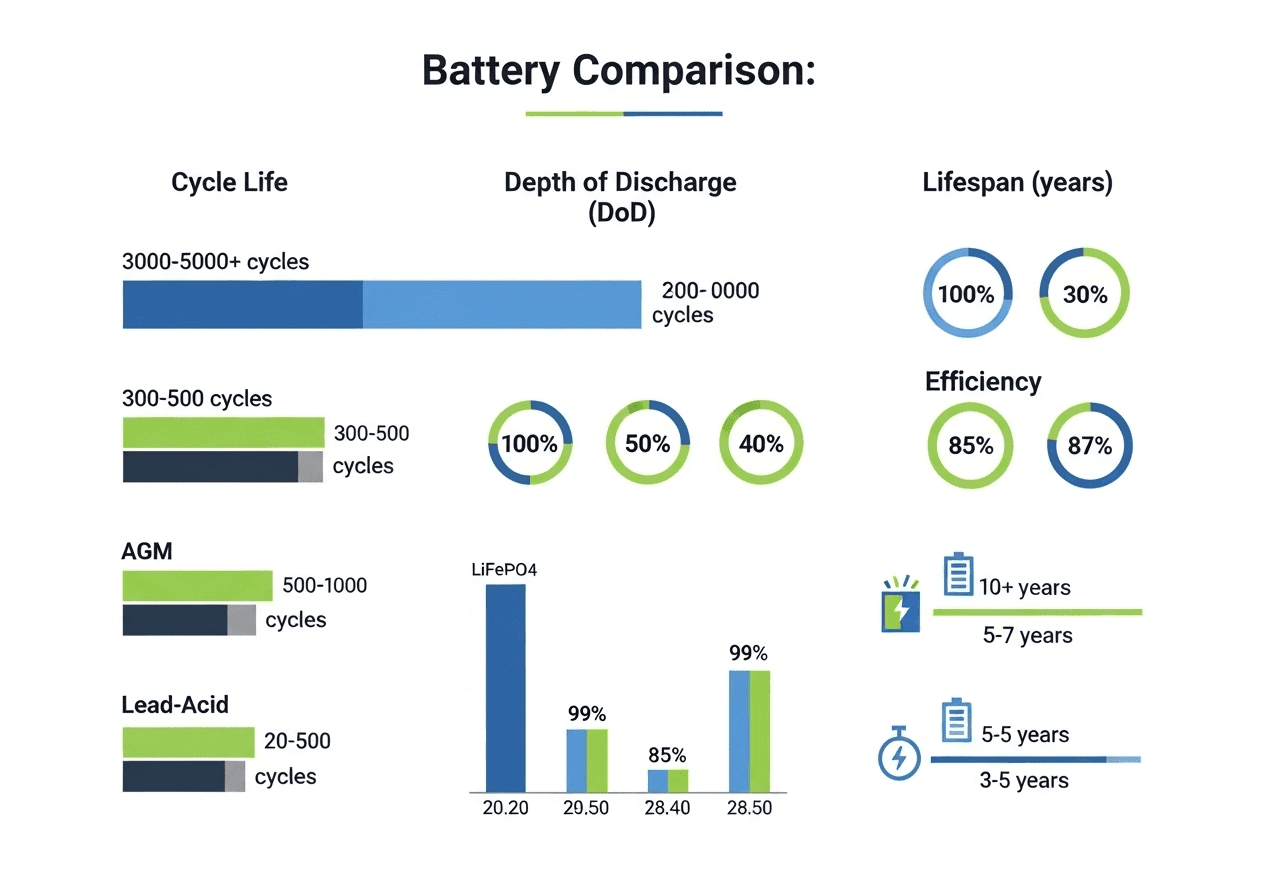
- Prefer LFP (better heat tolerance)
Cold climates (Alaska, Minnesota, Montana):
- Add 25-30% capacity for -20°C operation
- Battery heating required
- AGM or LFP with cold-weather BMS
Typical residential system (California):
- 48V, 13.5 kWh (Tesla Powerwall equivalent)
- LFP, 85% DOD, 92% efficiency
- Covers 4-6 hours evening TOU avoidance
Canada (CSA Standards)
Key differences from USA:
- Higher safety margins (15-20%) due to cold
- Battery heating systems mandatory in most regions
- Voltage drop calculations critical (cold increases resistance)
Saskatchewan example:
- Winter: -30°C common → 40% capacity loss for lead-acid
- Recommendation: LFP with integrated heaters + 30% oversizing
- Insulated battery enclosures standard
Ontario residential typical:
- 48V, 15-20 kWh systems
- Grid-tie with backup (frequent ice storms)
- Net metering optimization
Europe (IEC Standards)
Code framework:
- IEC 60364-7-712: PV system installations
- CE marking mandatory
- Higher efficiency requirements (prefer >92%)
Country-specific notes:
Germany:
- KfW incentives for solar + storage
- Focus on self-consumption optimization
- Common: 5-10 kWh systems for 4 kW solar
UK:
- G99 grid connection requirements
- VAT zero-rated for solar + storage (as of 2024)
- Typical: 48V, 9.5 kWh (Powerwall size)
Spain:
- High solar irradiance → smaller batteries often sufficient
- Focus on evening peak shaving
- Common: 5-7 kWh for 3-5 kW solar
Nordics (Sweden, Norway, Finland):
- Extreme cold → battery heating mandatory
- Off-grid cabins common → 24-48h autonomy
- Prefer LFP with -20°C rating
Australia (AS/NZS Standards)
Code requirements:
- AS/NZS 5139:2019: Electrical installations—Safety of battery systems
- Strict fire safety (bushfire zones)
- Hot climate derating mandatory
Climate challenges:
- Queensland summer: 35-45°C ambient → 15-20% capacity derating
- Northern Territory: Extreme heat + humidity
- Southern states: Moderate (similar to California)
- Typical residential (Sydney):
- 48V, 10-13 kWh systems
- LFP dominant (95%+ of new installs)
- Solar FiT optimization (feed-in tariff)
- Battery enclosures: shaded, ventilated
- Regional variations:
- Queensland:
- Highest derating requirements (20%)
- Battery cooling often needed
- Focus on afternoon solar storage
- Victoria:
- Solar Victoria rebates (up to $3,850)
- Time-of-use optimization critical
- 6-10 kWh average system size
- Western Australia:
- High electricity costs → larger systems (12-15 kWh)
- Off-grid common in rural areas
- 24-48h autonomy for remote properties
Asia: Emerging Markets & Unique Challenges
South Asia (Pakistan, India, Bangladesh)
- Grid challenges:
- Load shedding: 4-12 hours daily in many areas
- Voltage instability (160-260V swings)
- Frequent brownouts
- Typical system design:
- System voltage: 24V (affordability) or 48V (efficiency)
- Autonomy: 8-16 hours (full overnight + daytime backup)
- Battery preference: Shifting from lead-acid to LFP (cost declining)
- Safety margin: 20% (high temperatures, aging grid)
- Pakistan example (Karachi residential):
- Load: 2,000W (fans, lights, TV, fridge)
- Duration: 12 hours
- Temperature: 40°C in summer
- Calculation:
-
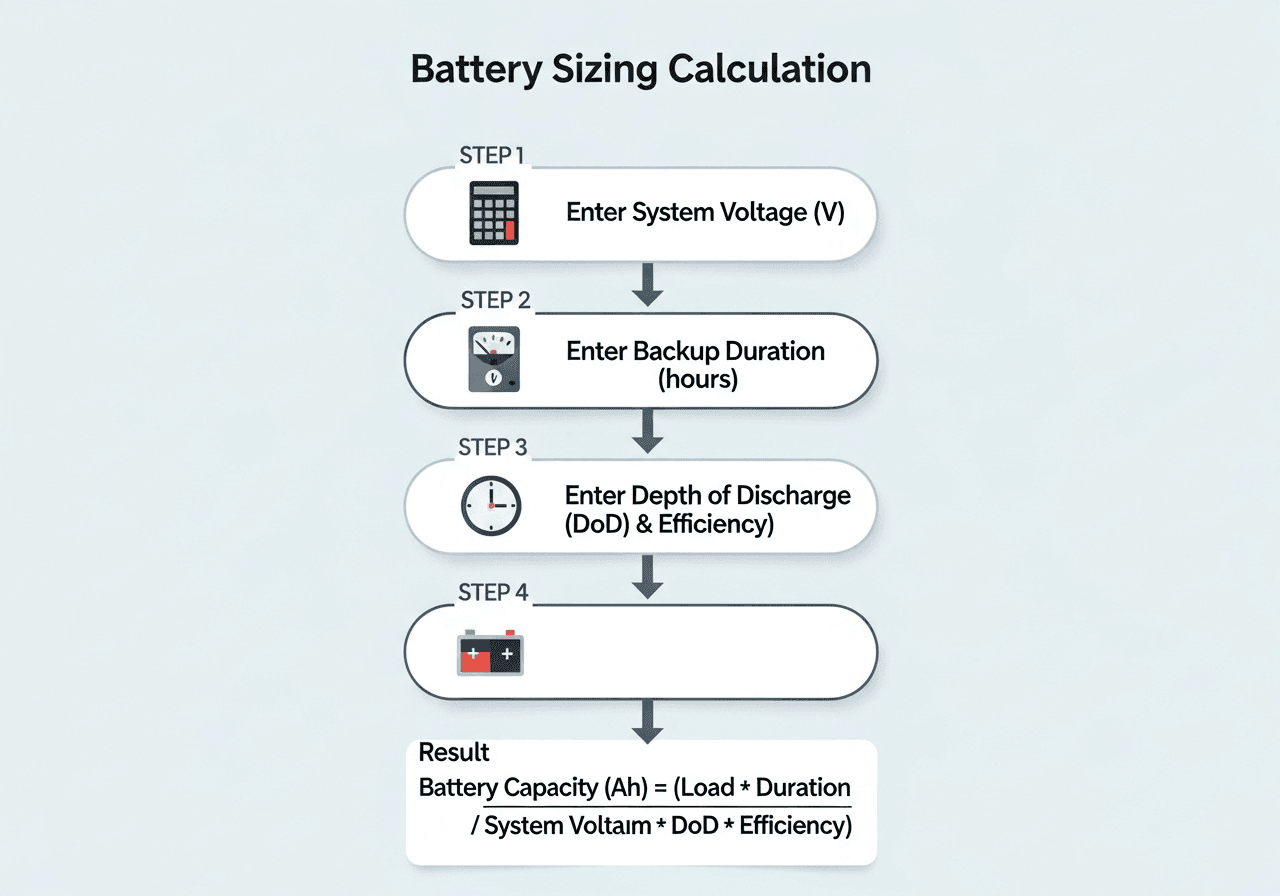
Required Ah = (2,000W × 12h) ÷ (24V × 0.88 × 0.75)
Required Ah = 24,000 ÷ 15.84 = 1,515 Ah
With 20% safety + 15% temp derating:
Adjusted = 1,515 × 1.20 × 1.15 = 2,091 Ah
Using 200 Ah, 12V batteries:
Series: 24V ÷ 12V = 2S
Parallel: 2,091 ÷ 200 = 10.5 → 11P
Configuration: 2S × 11P = 22 batteries
- Cost consideration: Lead-acid still dominant ($150-200 per battery) vs. LFP ($400-500)
East Asia (China, Japan, South Korea)
- Characteristics:
- Advanced battery manufacturing (CATL, BYD, LG, Samsung)
- High-efficiency requirements (>92% standard)
- Smart grid integration
- EV-to-home (V2H) emerging
- Japan specifics:
- Earthquake resilience critical
- Backup systems mandatory in many areas
- 48V, 7-10 kWh typical residential
- Government subsidies available
- China developments:
- Sodium-ion batteries emerging (2025+)
- Large-scale home storage adoption
- Integration with EV charging
- 48-51.2V systems standard
Middle East (UAE, Saudi Arabia, GCC)
- Extreme climate challenges:
- Summer temperatures: 45-50°C ambient
- Battery derating: 20-25% required
- Dust accumulation affects solar (cleaning needed)
- High AC loads (cooling dominates)
- Typical commercial system (Dubai office):
- Load: 15 kW (heavy AC, IT equipment)
- Duration: 4 hours (peak demand reduction)
- System: 110V or 230V DC (industrial scale)
Calculation:
Required Ah = (15,000W × 4h) ÷ (110V × 0.92 × 0.80)
Required Ah = 60,000 ÷ 80.96 = 741 Ah
With 15% safety + 20% heat derating:
Adjusted = 741 × 1.15 × 1.20 = 1,023 Ah
Using 100 Ah, 51.2V LFP modules:
Series: 110V ÷ 51.2V = 2.15 → 2S (with voltage buffer)
Parallel: 1,023 ÷ 100 = 10.2 → 11P
Configuration: 2S × 11P = 22 modules
Total: ~112V, 1,100 Ah = 123 kWh system
Cooling requirements: Active cooling often needed, adds 5-8% to power budget