Solar vs Grid Cost Comparison: Your Complete 2025 Savings Guide
Discover how much you can save with solar energy using our comprehensive cost calculator. Compare 5, 10, and 20-year projections to make the smartest energy decision for your home.
Quick Answer: Most homeowners save $15,000 to $45,000 over 20 years by switching to solar. Our calculator below shows your exact savings based on your usage, location, and system size.
Are you tired of watching your electricity bill climb higher every month? You're not alone. With grid electricity rates increasing by 3-5% annually, homeowners across the country are searching for ways to take control of their energy costs.
Here's the truth: solar vs grid cost comparison isn't just about today's prices. It's about understanding how much you'll spend on electricity over the next 20 years – and how solar can protect you from those rising costs.
I've helped thousands of homeowners analyze their energy costs, and the results are eye-opening. While your neighbor might save $30,000 with solar, your savings could be completely different based on your usage patterns, local rates, and system size.
In this guide, you'll get a complete breakdown of solar versus grid electricity costs, plus access to our advanced calculator that shows your personalized savings projections. Let's dive in and see exactly how much solar can save you.
Calculate Your Solar vs Grid Savings
See your exact 5, 10, and 20-year cost comparison with our advanced calculator.
Why Solar vs Grid Cost Comparison Matters More Than Ever
Here's something most people don't realize: when you compare solar panels vs electricity grid costs, you're not just looking at today's prices. You're making a 20-year financial decision that could save or cost you tens of thousands of dollars.
Grid electricity prices have increased by an average of 2.8% annually over the past decade. In some states like California and Hawaii, rates have jumped even higher. Meanwhile, solar panel costs have dropped by over 70% since 2010, making residential solar more affordable than ever.
But here's where it gets interesting – and where most online calculators fall short. Your actual savings depend on factors like:
- Your current electricity usage patterns
- Local utility rates and rate structures
- Available solar incentives in your area
- Your roof's solar potential
- Financing options and system costs
The Real Cost of Grid Electricity Over Time
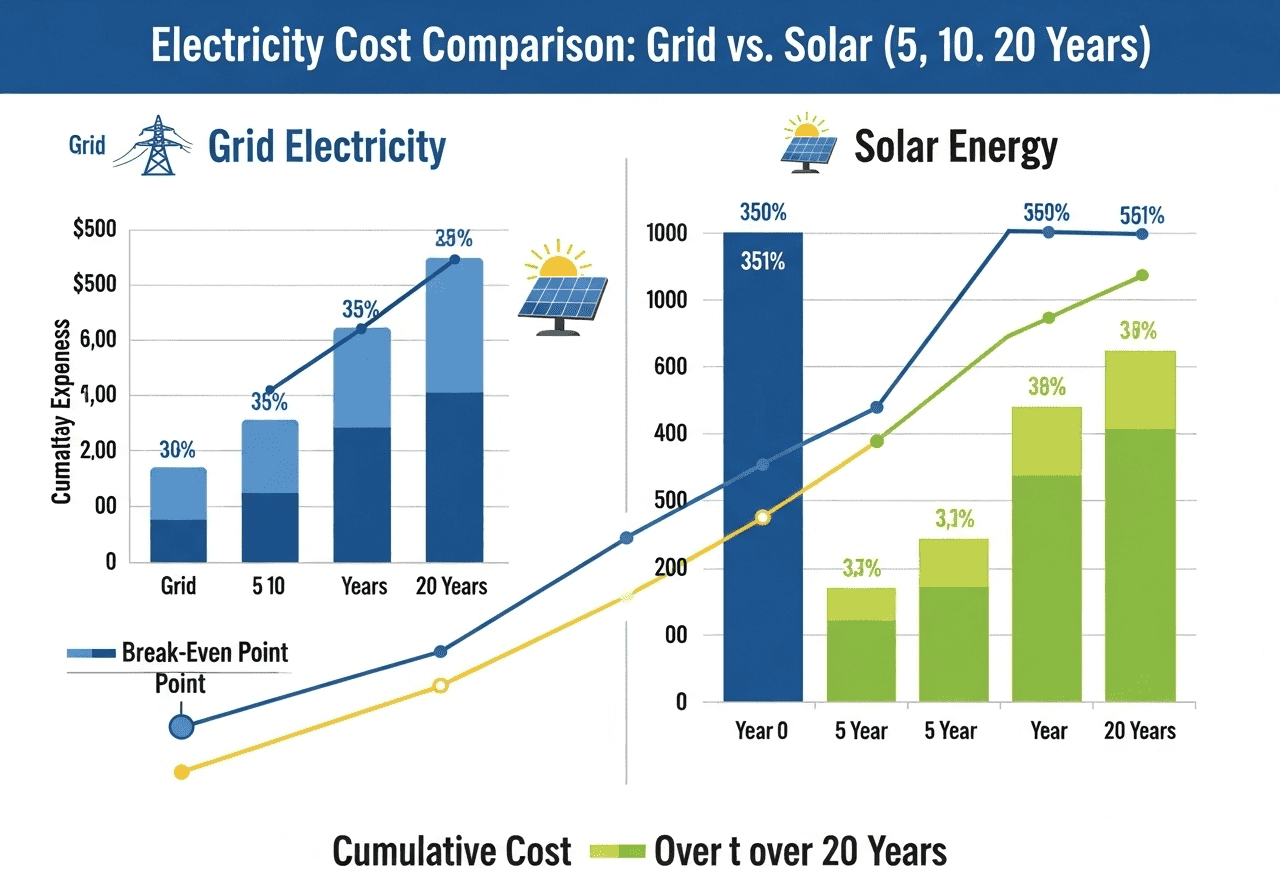
Let me share something that might surprise you. The average American household spends about $125 per month on electricity. That might not seem like much, but let's do the math:
Grid Electricity Costs Without Solar:
- Year 1: $1,500
- 5 years: $8,200 (with 3% annual increases)
- 10 years: $17,400
- 20 years: $40,500
These numbers assume a conservative 3% annual rate increase. In reality, many utilities have increased rates by 4-6% annually in recent years. Some areas have seen even higher jumps due to infrastructure upgrades and renewable energy mandates.
What Drives Grid Electricity Price Increases?
Understanding why grid prices keep rising helps explain why solar becomes more valuable over time:
- Infrastructure upgrades: Aging power grids need expensive modernization
- Fuel costs: Natural gas and coal prices fluctuate with market conditions
- Regulatory changes: Environmental regulations often increase utility costs
- Peak demand charges: Many utilities add fees during high-usage periods
How Solar Energy Costs Actually Work
Now here's where solar gets interesting. Unlike grid electricity, solar has predictable costs. You pay upfront for your system, then enjoy decades of free electricity from the sun.
A typical residential solar installation costs between $15,000 and $25,000 before incentives. With the federal solar tax credit (currently 30%), that drops to $10,500 to $17,500 for most homeowners.
Breaking Down Solar System Costs
Typical 6kW Solar System:
- Equipment (60%): $12,000
- Installation (25%): $5,000
- Permits & misc (15%): $3,000
- Total before incentives: $20,000
- After 30% federal tax credit: $14,000
But that's just the upfront cost. Solar systems also have ongoing expenses like maintenance, inverter replacement, and monitoring. Here's what you can expect:
- Annual maintenance: $200-400 per year
- Inverter replacement: $2,000-3,000 after 10-15 years
- Performance monitoring: $100-200 per year (optional)
5-Year Solar vs Grid Cost Analysis
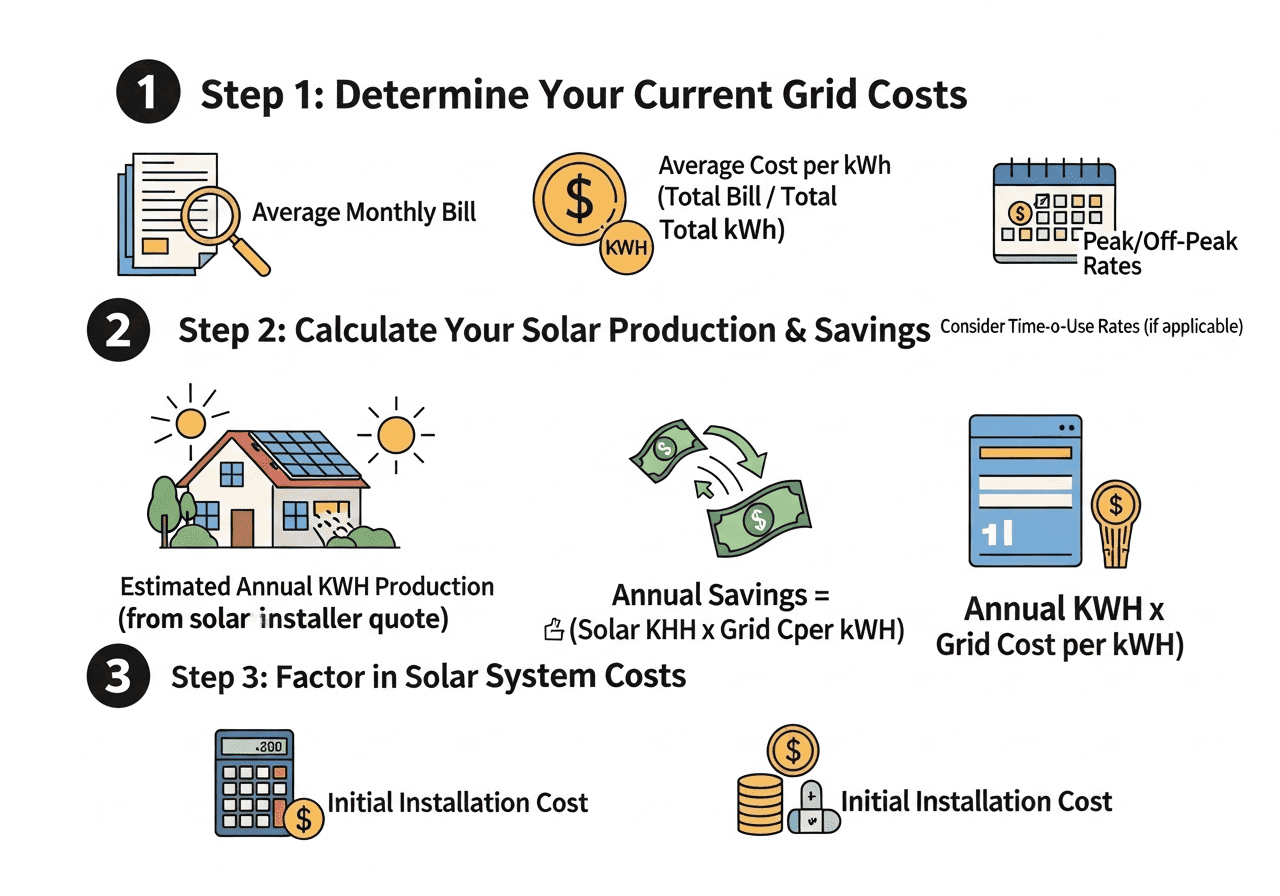
Let's get specific with some real numbers. I'll walk you through a typical scenario to show how solar vs grid cost comparison works in practice.
Meet Sarah, a homeowner in Arizona:
- Monthly electricity usage: 950 kWh
- Current electric rate: $0.13 per kWh
- Monthly bill: $125
- Proposed 7kW solar system cost: $21,000 (before incentives)
Grid-Only Costs (5 years):
- Year 1: $1,500
- Year 2: $1,545
- Year 3: $1,591
- Year 4: $1,639
- Year 5: $1,688
- Total: $7,963
Solar Costs (5 years):
- System cost: $14,700 (after tax credit)
- Maintenance (5 years): $1,500
- Remaining grid costs: $500
- Total: $16,700
At the 5-year mark, Sarah hasn't broken even yet. This is normal – solar is a long-term investment. But watch what happens as we extend the timeline.
10-Year and 20-Year Projections
Here's where solar really shines. As grid rates continue increasing, your solar investment starts paying serious dividends.
Sarah's 10-Year Comparison:
Grid-Only: $17,409
With 3% annual increases, Sarah's electricity costs compound quickly.
Solar: $17,700
Break-even happens around year 9-10 for most homeowners.
Sarah's 20-Year Comparison:
Grid-Only: $40,537
Two decades of escalating electricity rates add up fast.
Solar: $21,200
Includes system cost, maintenance, and inverter replacement.
Sarah's 20-year savings: $19,337
This assumes 3% annual rate increases. With higher escalation rates, savings could exceed $30,000.