

Soil Amendment Calculator: A Field Guide to Getting Your Lime and Gypsum Rate Right
What the numbers on your soil test actually mean, and how to turn them into a lime or gypsum rate you can trust.
Soil Amendment Requirement Calculator
Inputs
Saved Profiles
Show calculations & assumptions
—
QA Test Cases
| Case | Action |
|---|---|
| Loam, pH 5.0, SMP buffer 6.0, target 6.5 (India) | |
| Clay, pH 4.8, no buffer, target 6.5 (USA) | |
| Sandy, pH 6.8, EC 0.1 | |
| Saline‑Sodic pH 8.5, EC 4.0, ESP 20% |
Most lime bags get poured on guesswork. Someone sees cracked, sour-looking ground, buys a couple of tons of ag lime, and spreads it without checking how far the pH actually needs to move. Sometimes that works out fine. Often it doesn’t, and the crop is still struggling by mid-season.
A soil amendment calculator takes that guessing game out of the equation. Feed it your soil pH, buffer pH, texture, and target range, and it hands back a lime or gypsum rate matched to your actual field, not a flat number from whoever’s at the counter that day.
This guide walks through how these calculators work, which soil test numbers to have ready before you touch one, and the handful of mistakes that quietly waste real money per hectare. You’ll also get a straight answer on when a field needs gypsum instead of lime, which trips up more growers than you’d expect.
What Is a Soil Amendment Calculator?
Here’s the thing about rule-of-thumb liming: your field and the one three miles down the road are not the same field. Two farms with an identical starting pH can need very different lime rates, because texture and organic matter change how much acid is actually locked into the soil, not just what a pH meter reads on the surface.
Most crops want their pH sitting somewhere between 6.0 and 7.0. Drop below that and phosphorus and calcium start locking up in forms roots can’t reach. Push past 7.5, and iron, manganese, and zinc go the same way. A soil amendment calculator exists to land you inside that window without overshooting into a new problem.
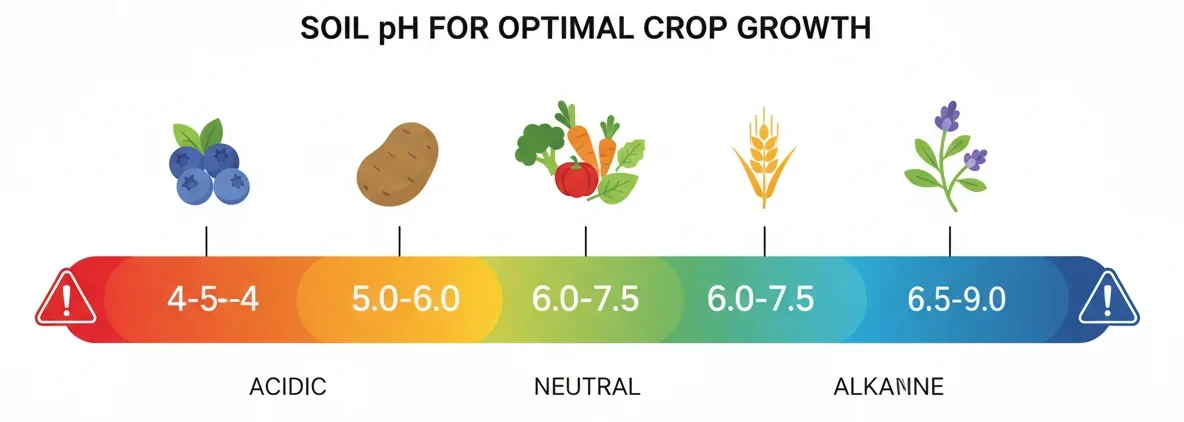
You need one of these tools if you’re managing anything from a quarter-acre vegetable bed to a large grain operation and you’re tired of either wasting lime or leaving yield sitting in soil that’s still too acidic. If you’re currently guessing pH by the feel of the dirt in your hand, it’s worth the ten minutes a real soil test and calculator take instead.
How Does a Soil Amendment Calculator Actually Calculate a Rate?
The Shoemaker-McLean-Pratt, or SMP, buffer method is the one most extension services treat as the gold standard. It works by mixing a soil sample with a buffering solution and reading how much the solution’s pH drops. That drop tells the lab how much “reserve acidity” is sitting in your soil beyond what a plain pH reading shows, and that reserve acidity is what actually determines your lime rate.
| Method | Data Needed | Typical Accuracy | Best For |
|---|---|---|---|
| SMP Buffer | Soil pH + buffer pH | ±10-15% | Any soil, especially clay-heavy fields |
| Adams-Evans Buffer | Soil pH + buffer pH | ±10-20% | Coastal plain and eastern US soils |
| Regional Lookup Table | Soil pH only | ±30-50% | Fast estimates before a buffer test is back |
| Direct Lime Buffer Capacity (LBC) | Lab-measured LBC value | Highest available | Research labs, university trials |
Without a buffer pH, a calculator falls back on a regional lookup, something closer to Lime (kg/ha) = 1,200 × ΔpH × texture factor × depth factor ÷ purity. It’s a reasonable stand-in, but it can miss by a third or more because it assumes an average buffering capacity for your region instead of measuring yours directly.
Why Does Soil Texture Change Your Lime Rate So Much?
The reason comes down to cation exchange capacity, or CEC, which is basically how many negatively charged sites a soil has for holding onto positively charged ions like hydrogen and aluminum. Clay particles are packed with these sites. Sand barely has any. That’s why a sandy field can swing its pH after a light application while a clay field barely budges after the same treatment.
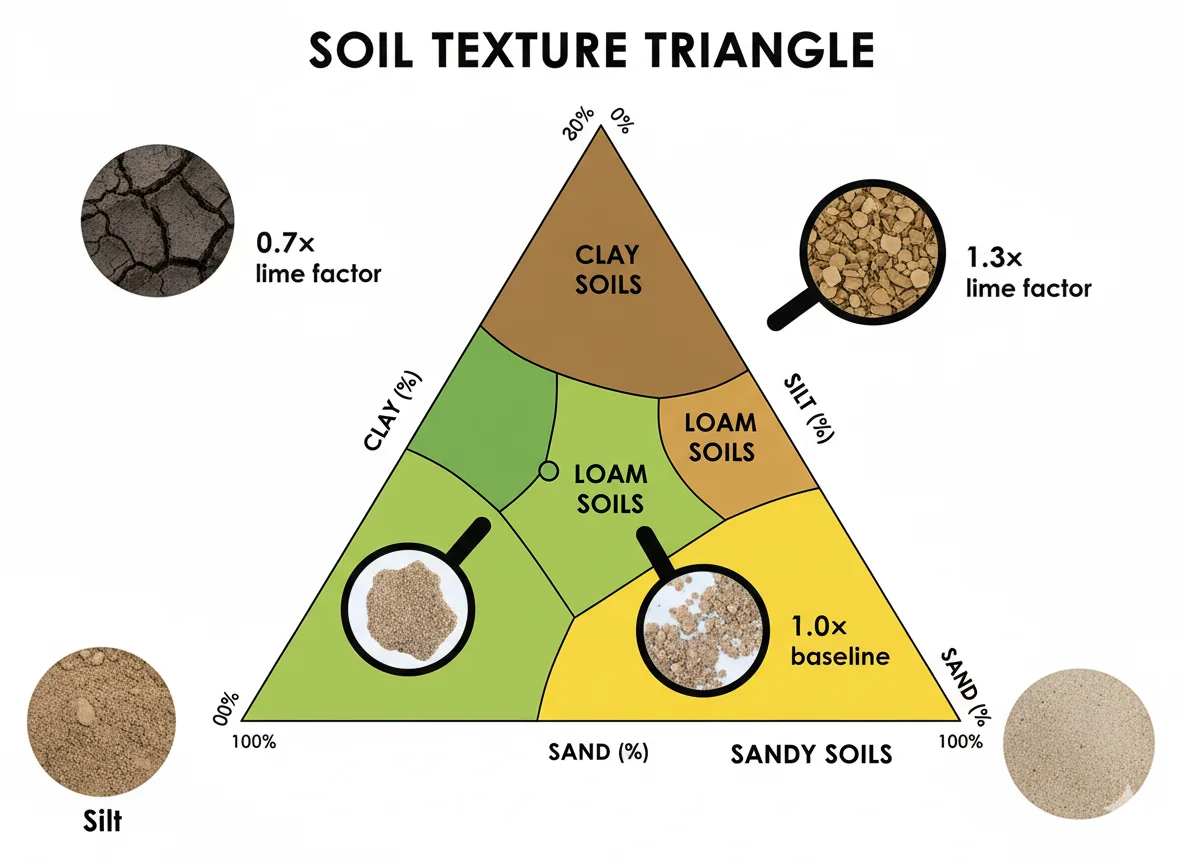
| Texture | Typical CEC (meq/100g) | Relative Lime Need vs. Loam |
|---|---|---|
| Sandy | 5-10 | About 30% less |
| Loam | 12-20 | Baseline |
| Silt Loam | 15-22 | About 5% more |
| Clay | 20-40+ | About 30% more |
This is exactly why plugging in the wrong texture class is one of the fastest ways to get a bad recommendation, even when every other number you entered was correct. If you’re unsure whether your ground is a loam or a silt loam, a simple jar test (settle a soil-water mix overnight and measure the layers) beats guessing.
Lime or Gypsum? How Do You Know Which One Your Field Needs?
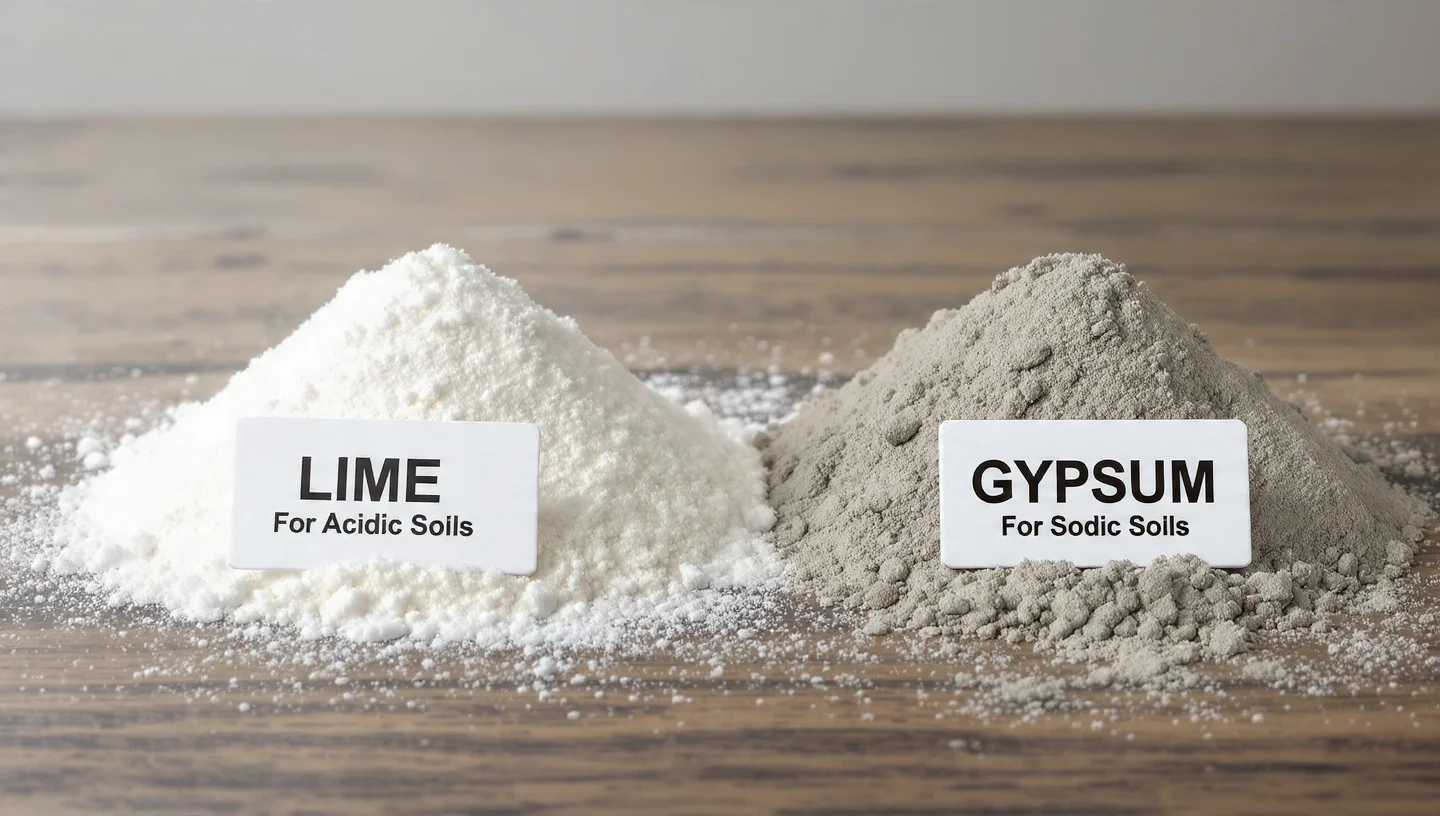
Lime works by neutralizing hydrogen ions, which is exactly why it raises pH. Gypsum doesn’t neutralize anything. It dissolves and releases calcium ions that swap places with sodium clinging to soil particles, and that swapped-out sodium then leaches away with irrigation or rainfall. The soil structure improves, drainage comes back, but the pH number barely moves.
This matters because applying lime to a genuinely sodic, high-pH soil makes things worse, not better. The pH climbs even higher, sodium dispersion gets worse, and soil structure can collapse to the point where water stops draining at all. If a field is already alkaline and you’re seeing white salt crusts or standing water after rain, test ESP before you buy anything.
What Soil Test Numbers Do You Need Before You Open the Calculator?

| Parameter | What It Tells You | Typical Range |
|---|---|---|
| Soil pH | Current acidity or alkalinity | 4.0-9.0 |
| Buffer pH | Reserve acidity behind the surface pH reading | 4.5-7.5 |
| EC (electrical conductivity) | Total soluble salt content | 0-8+ dS/m |
| ESP / SAR | How much exchangeable sodium is present | 0-40%+ |
Texture class isn’t something a lab always reports on the basic panel, so ask for it directly, or run the jar test mentioned earlier if you’re working from an older report that skipped it.
A 6-Step Walkthrough for Using a Soil Amendment Calculator
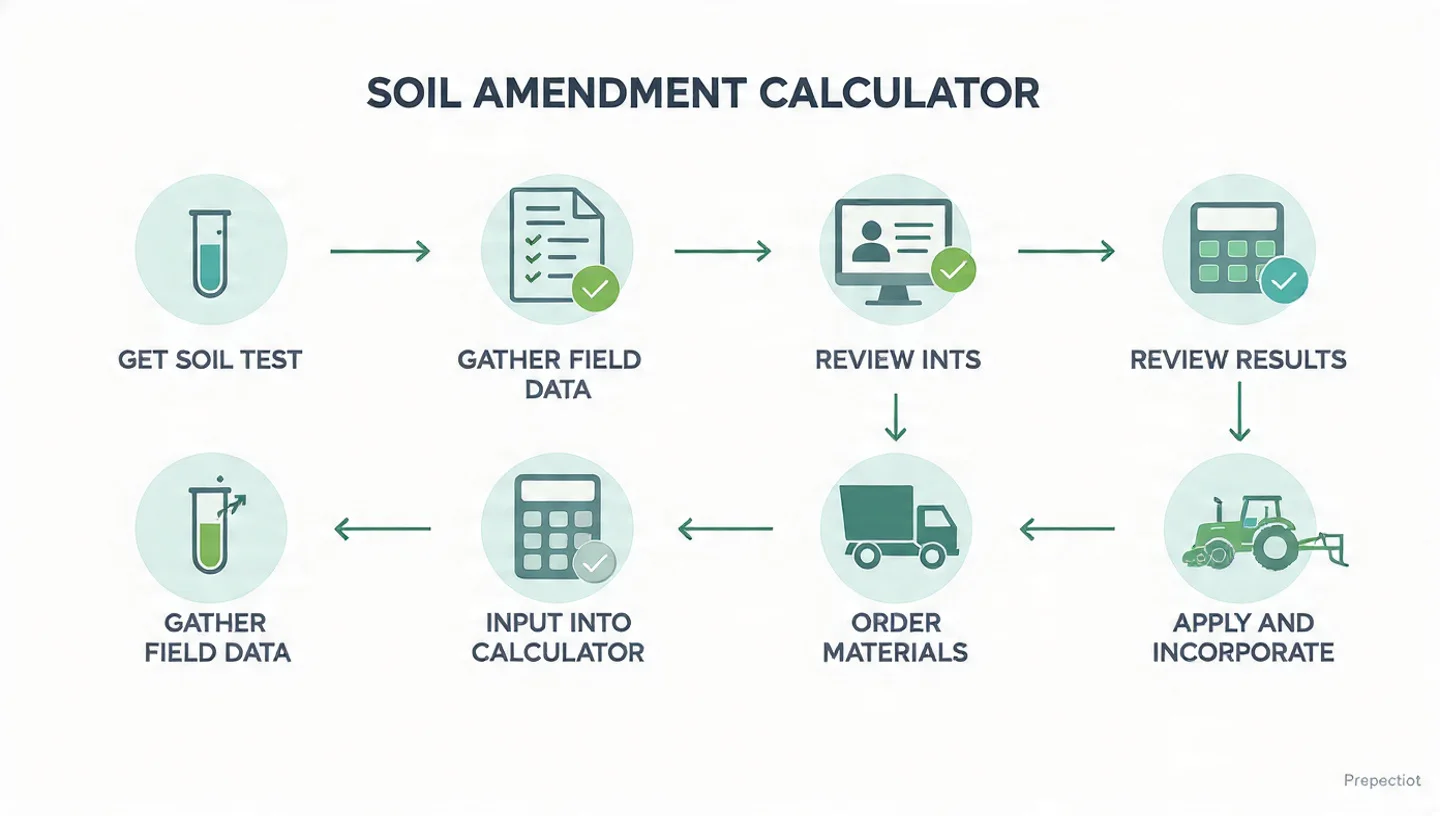
- Pull your lab report. Have pH, buffer pH, EC, ESP, and texture ready before you start entering anything.
- Pick your region and target pH. South Asia, USA/Europe, Australia, and Africa each default to slightly different target ranges based on local crop mixes and rainfall patterns.
- Enter your soil chemistry. Use exact lab values (5.23, not “about 5”), and leave ESP blank if you don’t have a reading rather than guessing.
- Add field details. Total area, unit (hectares, acres, or square meters), and application depth, 15 cm is the standard assumption.
- Enter material purity. Check the bag label. Agricultural lime usually runs 90-95%, dolomitic lime 85-90%, and gypsum 85-95%.
- Review the confidence level and save. A result flagged “high confidence” means your buffer pH was used; “medium” or “low” means treat the number as a starting estimate, not a final order quantity.
Worked example: a 2-hectare heirloom tomato plot in Ohio, soil pH 5.4, no buffer pH taken yet, silt loam, target pH 6.5, lime purity 90%, standard 15 cm depth. Since there’s no buffer pH, the calculator falls back on the regional lookup formula:
Lime (kg/ha) = 1,200 × (6.5 − 5.4) × 1.05 × 1.0 ÷ 0.90 = 1,540 kg/ha, or about 3,080 kg (roughly 3.1 metric tons) across the full 2 hectares. Because no buffer pH was entered, the tool would flag this as a medium-confidence estimate, good enough for planning, but worth confirming with a buffer test before a large lime order.
Run Your Own Numbers
Solvebility’s free Soil Amendment Calculator handles SMP, Adams-Evans, and regional lookup methods automatically, with region defaults for South Asia, USA/Europe, Australia, and Africa built in.
Open the Soil Amendment Calculator →Applying Your Results in the Field Without Wasting Product
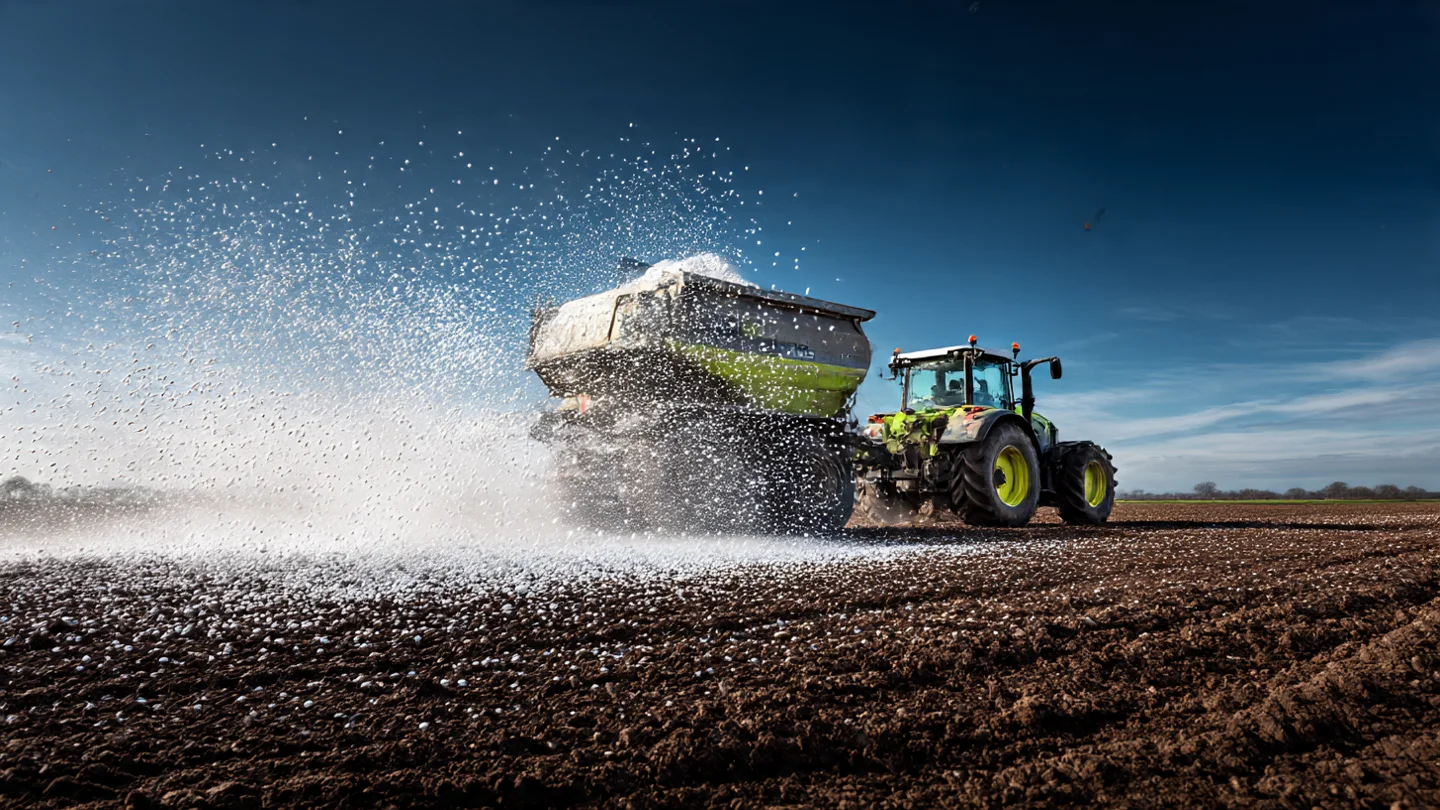
Lime barely moves once it’s on the ground, roughly 1-2 cm a year without help, so surface broadcasting alone only corrects the top few centimeters. Till or disk it into the top 15-20 cm whenever you can, and for no-till fields, plan on smaller, more frequent applications instead of one large dose sitting on the surface.
When a calculation comes back above 4 tons per hectare, split it: half incorporated deeply in fall, the rest the following spring. This avoids shocking the soil biology with a sudden pH swing and tends to correct pH more evenly than one heavy pass. Particle size matters too, a blend of roughly 70% medium-grade and 30% fine-grade material gives a faster initial response plus longer-lasting correction than either grade alone.
Fall applications generally outperform spring ones simply because lime gets a full winter of moisture to react before planting. If you’re applying in spring instead, budget 3-6 months before you’ll see the full pH shift show up in a retest.
5 Mistakes That Turn a Correct Calculation Into a Wasted Application
An uncalibrated spreader
A calculator can hand you a perfect number, but a spreader running 20% hot or light undoes all of it. Calibrate against a known area before the first pass, not after.
Liming a field you never tested for sodicity
High pH ground that looks like it “needs lime” can actually be sodic. Lime makes that problem worse. Always check ESP first if pH is already above 7.5.
Applying lime and phosphorus fertilizer in the same week
The two can tie each other up chemically. Leave 2-4 weeks between a lime pass and a phosphorus application for both to work as intended.
Guessing purity instead of reading the bag
Purity swings from 85% to 98% between products. Entering “100%” because you didn’t check the label quietly under-applies real neutralizing capacity by 10-15%.
Never retesting after application
Sandy soils shift in 1-3 months, loams in 3-6, clay in 6-12. Skipping the retest means you’re guessing again next season instead of adjusting from real data.
Frequently Asked Questions
A flat rate applies one number to every field regardless of texture or buffering capacity. A soil amendment calculator adjusts for your actual pH gap, texture, and, when available, buffer pH, so a sandy field and a clay field with the same starting pH get different, correct answers instead of the same guess.
Yes, most tools fall back on a regional lookup table using pH alone. It’s useful for a fast estimate, but accuracy drops to roughly ±30-50%, compared with ±10-15% once a buffer pH is entered. Treat a no-buffer result as a planning number, not a final order quantity.
Gypsum typically runs somewhat higher per ton than agricultural lime and is often needed in larger tonnage for genuinely sodic soils. Actual cost depends heavily on local supply, so get a delivered quote for both before assuming lime is always the cheaper fix.
Texture drives a multiplier of roughly 0.7 to 1.3 on your base lime rate. Entering “loam” for what’s really a clay soil can under-apply lime by 20-30%, leaving the field under-corrected even though every other input was accurate.
No. The calculator is only as good as the numbers you feed it. It replaces guesswork and rule-of-thumb rates, not the lab test itself. Always start with an accredited soil test and use the calculator to turn those results into an application rate.
Ideally within the same season as your soil test, since pH and salinity shift over time with rainfall and fertilizer use. Fall application is common for lime because it gets a full winter to react before spring planting.
The pH math stays the same, but organic operations often lean on high-calcium lime or gypsum sources that are OMRI-listed, and may combine amendments with compost to boost effectiveness by 20-30% while using less mineral lime overall.
Once a calculation shows more than 4 tons per hectare, split it into two passes, roughly half in fall and half in spring, instead of applying it all at once. This avoids localized over-liming and gives soil biology time to adjust.
Getting Your Rate Right the First Time
A soil amendment calculator turns a soil test you’d otherwise file away into an exact lime or gypsum rate you can act on. You’ve now seen how the SMP and regional lookup methods differ, why texture swings your number by 30% in either direction, and how to tell a genuinely acidic field from a sodic one before you buy the wrong material.
Start with an accredited soil test that includes buffer pH. Run the numbers through a calculator built for your region. Apply at the correct depth, split heavy rates across two passes, and retest in 6-12 months to confirm the correction actually held.
Pair the same soil data with related tools like a fertilizer dose calculator or a crop nutrient requirement calculator for a fuller picture of what your field needs this season, and a land area calculator if you’re still mapping out exact field boundaries.
Ready to Calculate Your Field’s Rate?
Enter your soil test results into the free Soil Amendment Calculator and get a lime or gypsum recommendation in under two minutes.
Try the Calculator →References & Further Reading
- Food and Agriculture Organization. Voluntary Guidelines for Sustainable Soil Management.
- USDA Natural Resources Conservation Service. Soil Survey Manual.
- CSIRO. Liming Acidic Soils: Profits, Land Use Options and Emissions.
- Also useful: the Drip Irrigation Design Calculator for planning water alongside soil chemistry.
Reviewed for accuracy against SMP, Adams-Evans, and regional lookup method references. Last updated July 2026. This guide is educational and does not replace a certified soil test or a local extension agronomist’s recommendation.