
Why Solar Panels Underperform in Winter
Solar panels usually produce less power in winter than in summer, but the size of the seasonal drop varies by location. Latitude, local weather, shading, snow, system orientation, and the available solar resource all matter.
Homeowners see a smaller winter credit on the bill and assume something broke, or that the installer oversold the system. Almost always, nothing’s wrong. The system is doing exactly what the physics predicts.
4 things drive the drop: shorter days, a lower sun angle, more cloud cover, and, in snowy regions, actual snow sitting on the glass. Cold air barely factors in. In one narrow, counterintuitive sense, cold weather even helps a solar cell work better.
This guide breaks down why solar panels underperform in winter using real numbers: NLR irradiance data, a Northeastern installer’s own monitoring data, and a peer-reviewed snow-loss study out of Colorado and Wisconsin. No estimates pulled from thin air. Check your own address against these ranges anytime with our solar calculators.
Do solar panels really produce less power in winter?
Yes. A typical U.S. solar system produces 30% to 50% less electricity in December and January than it does in June and July, mainly because of shorter days and a lower sun angle. Cold temperatures aren’t the problem; in some ways, they help. Daylight and geometry do most of the damage, not the thermometer.
Every grid-tied solar system in a four-season climate follows the same curve: high in June, low in December, spring and fall in between. Northeastern installer Lighthouse Solar, which tracks real customer systems through its own monitoring platform, reports panels producing 40% to 60% less energy in December and January than in July and August.
That range holds up nationally. The U.S. Energy Information Administration documents a clear seasonal pattern in U.S. solar PV generation, with higher solar irradiance and generation rates in summer and lower values in winter.
None of this makes winter solar a bad investment. It means a system sized around your annual average, not just your sunniest month, keeps working the way it’s supposed to all year.
What causes the winter drop in solar output
4 factors do almost all the work, and the cold isn’t one of them. Stack them together and you get the seasonal curve every solar owner watches on their utility app.
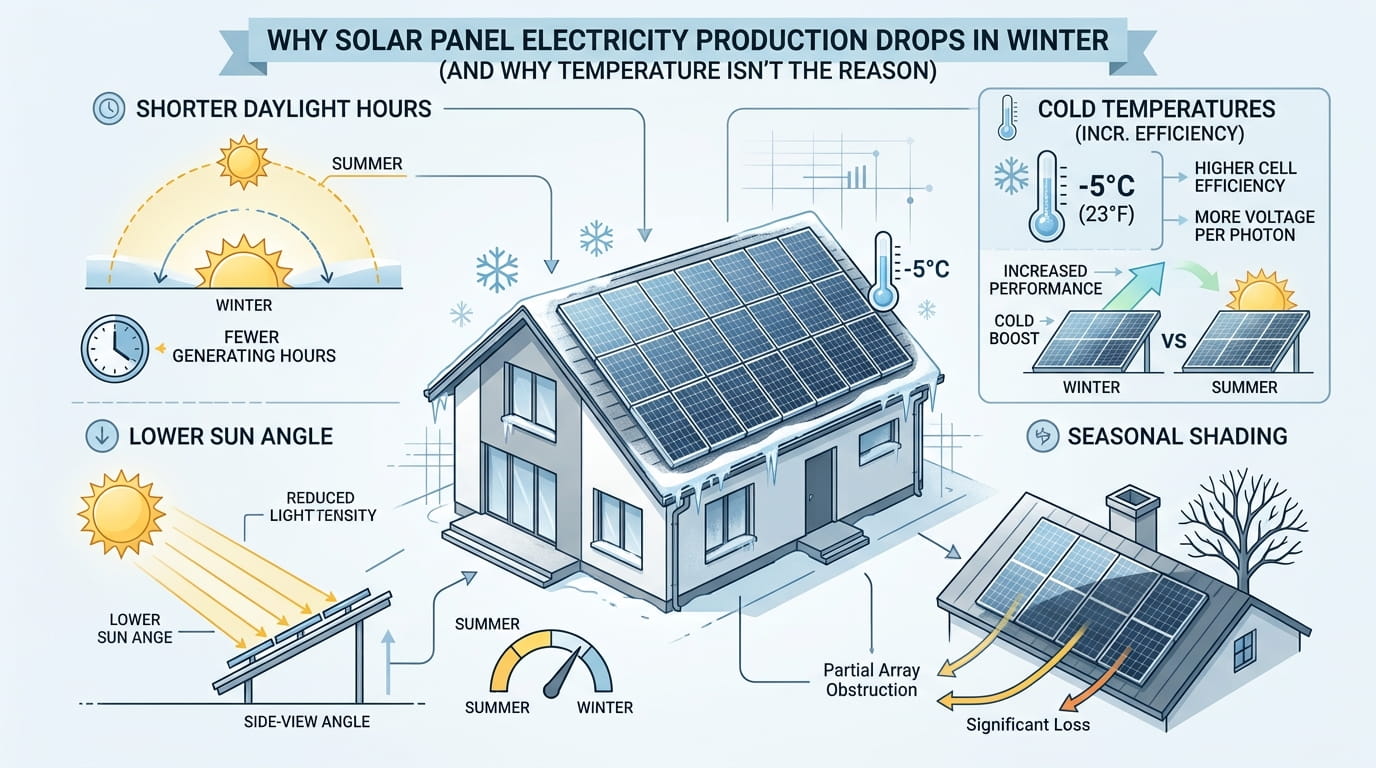
Shorter days mean fewer peak sun hours
Peak sun hours measure the equivalent number of hours per day when sunlight hits at full intensity, 1,000 watts per square meter. It’s the number every installer uses to size a system, and it swings hard with the seasons.
In Seattle, winter peak sun hours average around 1.5 a day. By June, that same rooftop sees close to 6.0. In Charlotte, North Carolina, NLR’s PVWatts data puts December at 3.43 peak sun hours and June at 6.63, nearly double.
Massachusetts runs a similar spread: under 2 peak sun hours a day in winter, over 5 in summer, for a statewide annual average near 4. Fewer usable hours means less total energy, even before anything else on this list kicks in.
A lower sun angle spreads out and weakens the light
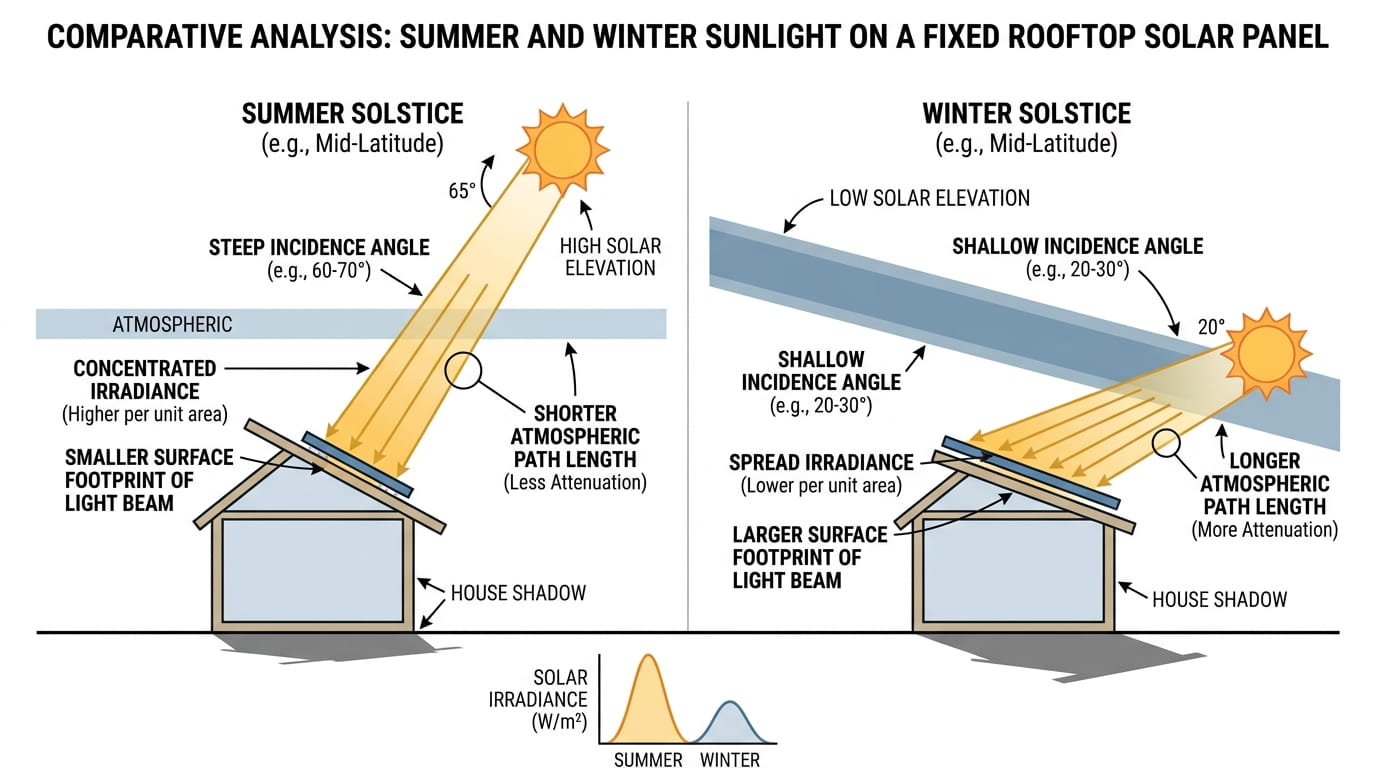
Even during the hours the sun is up, the winter sun is much lower above the horizon. On a fixed rooftop array, that can make sunlight strike the modules more obliquely and reduce the irradiance available to the array.
Solar intensity follows the cosine law: as the angle between the sun and your panel widens, usable energy falls off with the cosine of that angle. A 30-degree mismatch between the sun’s position and your panel’s tilt costs about 13% of the available energy. Push that to 60 degrees and you lose half.
In London, at 51 degrees north latitude, the midday sun sits around 60 degrees above the horizon in summer and drops to roughly 15 degrees in winter. Low-angle light also travels through far more atmosphere before it reaches the panel, a phenomenon called air mass, which scatters and absorbs even more energy on the way down.
A steeper, winter-biased tilt can improve winter solar capture and help shed snow, but the best angle depends on your latitude, roof, shading, and whether you are optimizing for winter or annual production. Our panel tilt and orientation optimizer can show you the tradeoff for your specific roof.
Cloud cover blocks direct sunlight
Winter storm tracks push more cloud cover across most of the U.S. than summer high-pressure systems do. Clouds don’t just dim the sun; they change how panels receive light, swapping strong direct beams for weaker, diffuse light scattered across the whole sky.
One UK energy engineer measured this directly: a panel that produced 400-plus watts on a clear summer day dropped to around 40 watts on an overcast winter one, roughly a tenth of the output. Of that drop, the sun-angle effect accounted for about a quarter. Cloud cover and the shift to diffuse light accounted for the rest.
Long shadows and seasonal shading eat into output
A tree that clears your panels by 10 feet in July can throw a shadow across half the array in January. The sun’s lower arc means shadows from trees, chimneys, neighboring rooflines, and even snowbanks stretch farther and last longer.
Even partial shading on one panel can drag down an entire string’s output, depending on how the system is wired. If your installer ran a shade analysis, it’s worth asking whether they modeled the December sun position too, since that’s when shading tends to bite hardest.
How winter solar performance varies by climate
Winter does not affect every solar installation in the same way. Higher-latitude locations generally experience a larger seasonal change in daylight and solar elevation, while cloudy climates can see additional losses from reduced direct irradiance. Snow matters most where panels remain covered for meaningful periods. In warmer or lower-latitude locations, winter production can be much closer to summer production, although local weather and system orientation still matter.
| Condition | Typical winter effect | Why it matters |
|---|---|---|
| Higher latitude | Larger seasonal change | Shorter days and lower solar elevation reduce available irradiance. |
| Cloudy winter climate | Additional production reduction | More of the available light is diffuse and weaker than direct sunlight. |
| Snowy climate | Temporary to significant losses during cover | Snow can block light until it melts or slides away. |
| Sunny, lower-latitude climate | Often smaller seasonal swing | Winter daylight and solar elevation remain comparatively favorable. |
Does cold weather make solar panels more efficient?
Yes, technically. Solar cells lose efficiency as they heat up, so below the 25°C test standard, output rises. A typical panel gains back roughly 0.24% to 0.50% of its rated power for every degree Celsius below 25. It’s a real effect, just a small one next to the much larger losses from shorter days and weaker winter light.
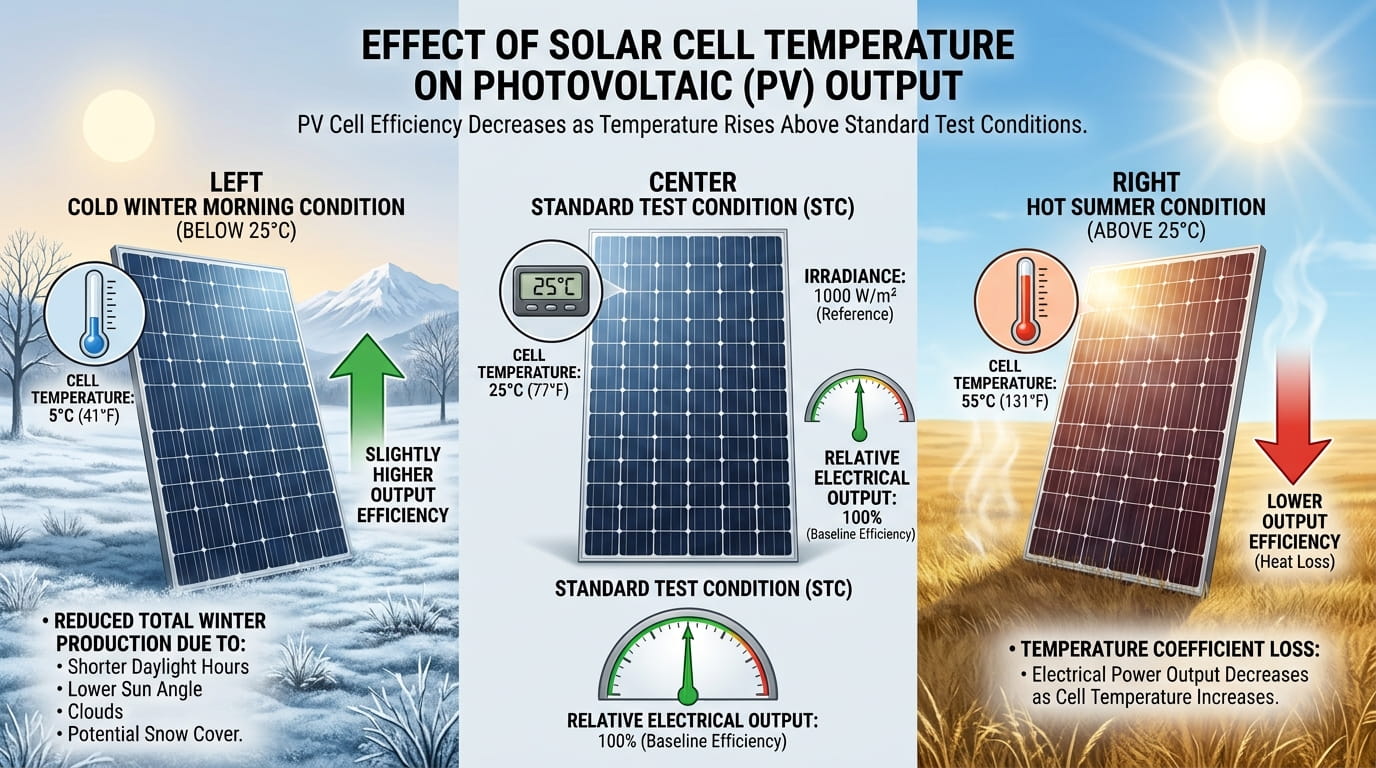
Every solar panel datasheet lists a temperature coefficient, expressed as a percentage per degree Celsius. It is usually negative because higher cell temperatures reduce power output. The exact coefficient varies by module technology and model, so the panel datasheet is the best source for a specific system. NLR PVWatts documentation likewise models module temperature effects using technology-specific coefficients.
The relationship runs both directions. Panels get tested at 25°C. Push the cell hotter and output falls. Push it colder and output climbs above the rated wattage.
For example, if a module has a -0.35%/°C power coefficient and its cell temperature is 20°C below the 25°C reference condition, the temperature effect alone would increase power by about 7%. Actual module temperature and operating conditions vary, so this should be treated as an illustration rather than a field-output guarantee.
That’s a real gain, and it’s why a clear January afternoon can outproduce a hazy, humid July one, watt for watt, panel for panel. It just can’t outrun the bigger problem: winter hands you fewer hours of weaker, lower-angle light to work with in the first place.
How much less electricity do you lose in winter?
There is no single U.S. winter-loss percentage. Solar production is strongly seasonal, and the difference between winter and summer varies with latitude, cloud cover, snow, shading, tilt, and local irradiance. Location-specific data is more useful than applying one national percentage to every rooftop.
The table below pulls from real NLR irradiance data and one installer’s own monitored systems, not modeled guesses.
How these winter solar comparisons were built
The location examples use solar-resource and PV performance information from NLR resources, while the national seasonal pattern is supported by U.S. Energy Information Administration data. NLR’s PVWatts framework uses location-specific solar irradiance, temperature, system orientation, and other inputs to estimate photovoltaic production. That means a winter estimate should be treated as location-specific rather than as a universal percentage.
Where monitored installer data or published snow studies are cited, those figures are presented as examples from the stated systems and locations—not as a guarantee for every U.S. rooftop. Your actual winter output can differ because of roof orientation, tilt, shading, weather, snow cover, system losses, and equipment.
| Location / dataset | Winter figure | Summer figure | Source |
|---|---|---|---|
| Seattle, WA | ~1.5 peak sun hrs/day | ~6.0 peak sun hrs/day (June) | NLR PVWatts v8 / NSRDB |
| Charlotte, NC | 3.43 peak sun hrs/day (Dec) | 6.63 peak sun hrs/day (June) | NLR PVWatts v8 / NSRDB |
| Massachusetts (statewide) | Under 2 peak sun hrs/day | Over 5 peak sun hrs/day | State insolation data |
| U.S. national average | 25-50% below annual figure | Annual average ~5.0 peak sun hrs/day | NLR / NSRDB |
| Northeastern U.S. (monitored rooftops) | 40-60% less output, Dec-Jan | vs. same systems in Jul-Aug | Lighthouse Solar, real monitoring data |
The swing gets more dramatic the farther north and the cloudier the climate. For a full breakdown of every loss factor stacked together for your own roof, our solar performance loss breakdown analyzer models angle, temperature, and shading at once. To see what that means in kilowatt-hours for your address, run it through our solar watt-hour calculator.
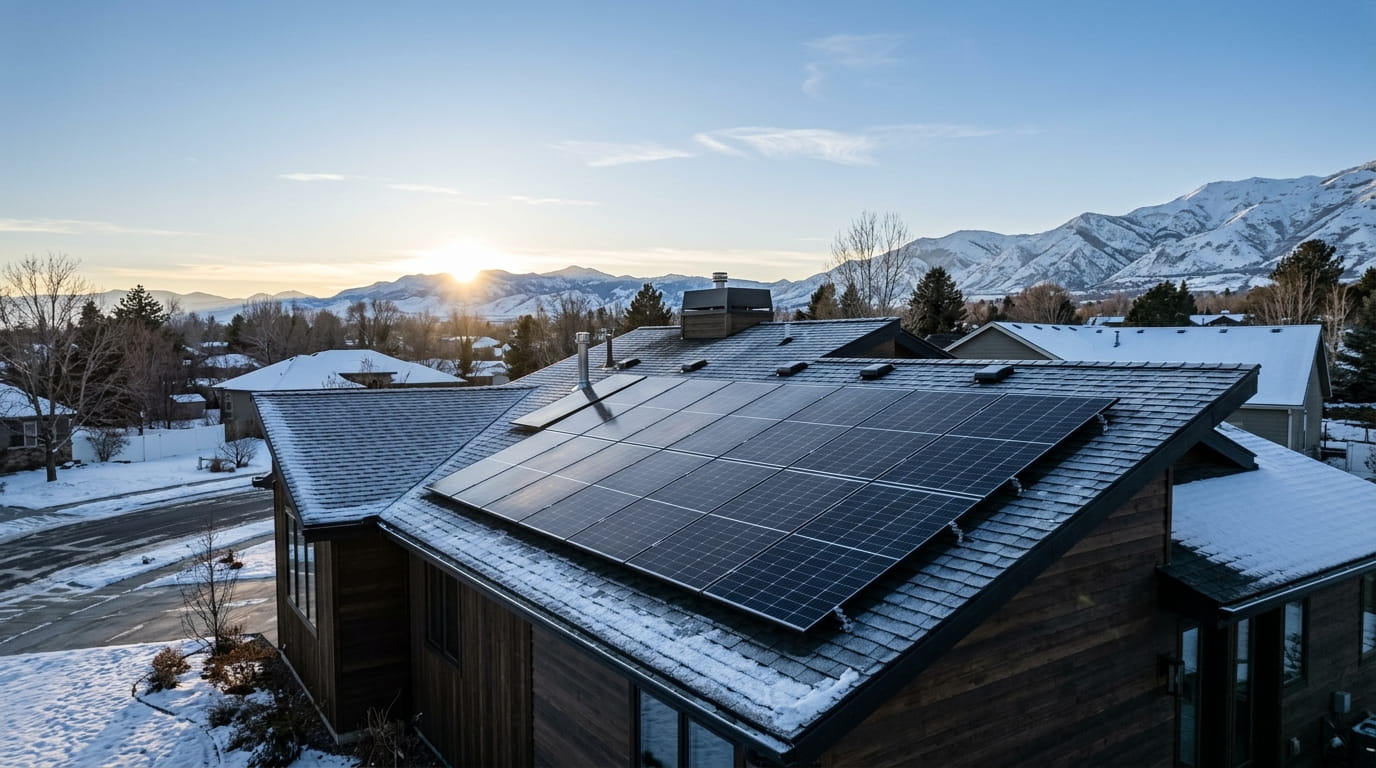
Does snow cover kill your solar output for the season?
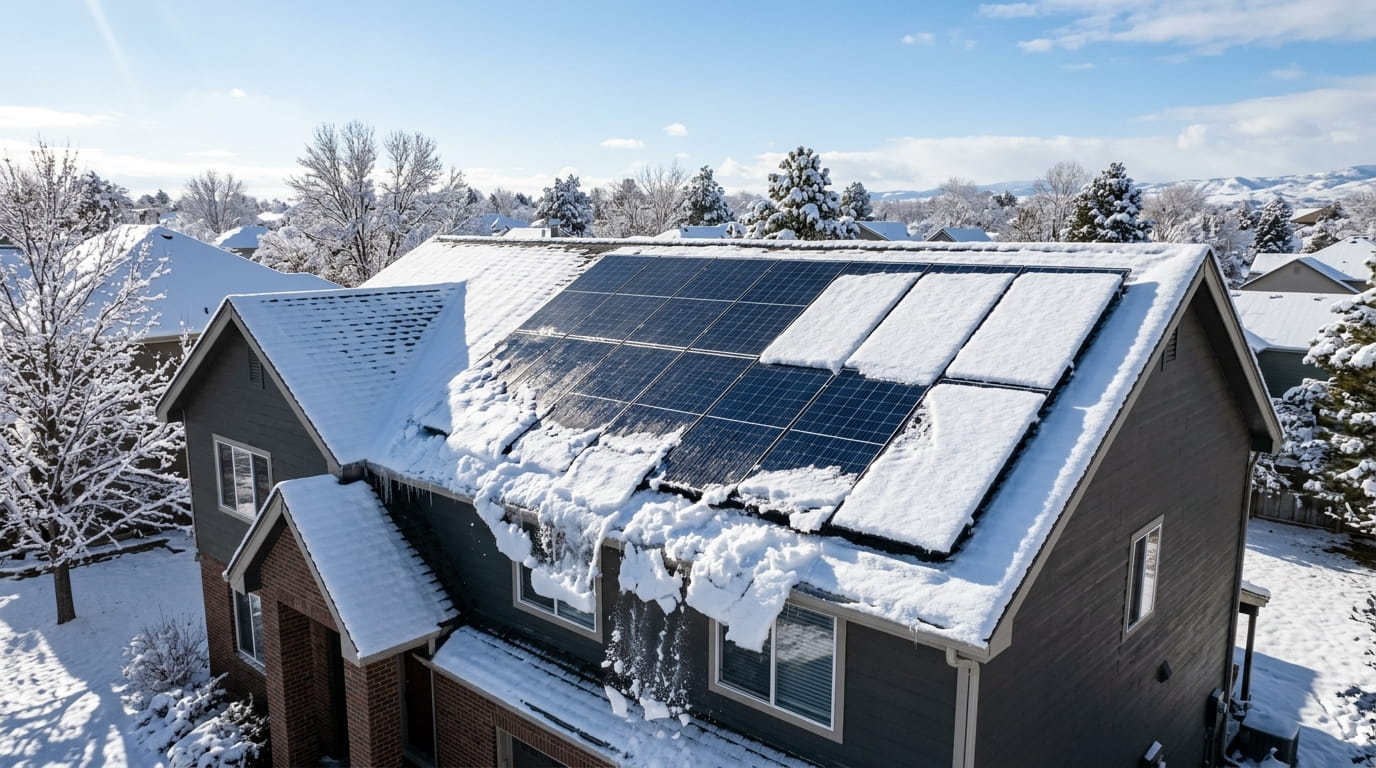
No. NLR and Sandia National Laboratories studied real rooftop systems in Colorado and Wisconsin and found snow cuts annual output by just 1% to 12%, even though a single heavy snow month can knock out up to 90% of that month’s production. Panels are dark, smooth, and often tilted, so snow tends to slide or melt off faster than people expect.
Snow physically blocks light, so a fully covered panel produces close to nothing until it clears. The real question is how often that happens and for how long.
NLR and Sandia National Laboratories partnered with AlsoEnergy to monitor 6 real PV systems across Colorado and Wisconsin over 2 winters. Annual losses landed between 1% and 12% of total output, with low-tilt, fixed-mount systems on the higher end and steeper installations shedding snow faster and losing less. In one separate case, engineers analyzing an 8-megawatt solar farm in Ontario tied a 4.25% seasonal snow loss to about $140,000 in lost revenue for that single site.
Snow’s biggest advantage is timing. It tends to fall during the darkest, lowest-output weeks of the year anyway, so 3 snow-covered days in December cost far less than 3 cloudy days would in June.
| System / location | Annual snow loss | Notable detail | Source |
|---|---|---|---|
| Colorado & Wisconsin rooftops (monitored) | 1% to 12% of annual output | Up to 90% loss in a single worst month | NLR / Sandia, winters 2010-2012 |
| Low-tilt (10-15°) fixed system, Colorado | Can exceed 9% annually | Snow lingers longer at shallow angles | NLR 5-system tilt comparison |
| 8 MW utility-scale farm, Ontario | 4.25% of annual output | ~$140,000 in lost revenue for the site | PV snow-loss modeling case study |
| Steeper-tilt systems (30°+) | Lower than low-tilt equivalents | Snow slides off faster on its own | NLR snow model (Marion et al.) |
| Most snowy-climate residential systems | Typically 1% to 5% | Within the broader 1-12% published range | NLR / Sandia summary |
Skip the shovel, the hot water, and the pressure washer. A soft-bristle roof rake, or simply letting the sun and the panel’s own smooth, angled surface do the work, protects the glass and keeps your warranty intact.
How to cut winter solar losses before the snow flies
You can’t change the sun angle or the length of December. A few decisions still change how much winter costs you.
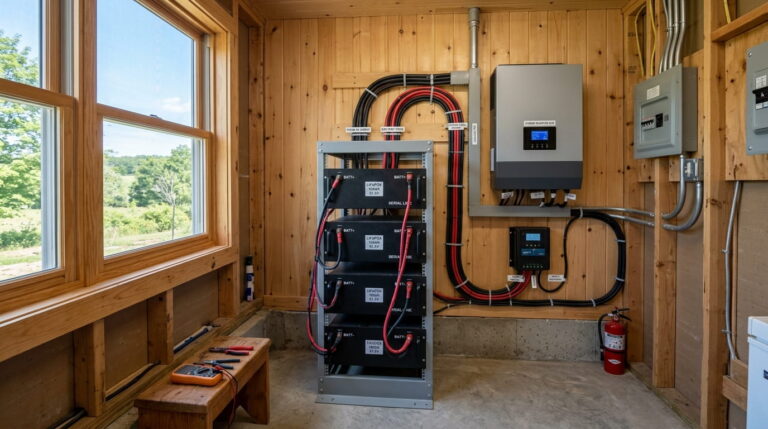
- For off-grid or battery-backed systems, check the lowest-production months instead of relying only on an annual average. The design target should reflect your location, load profile, storage, backup options, and acceptable reliability. Our battery sizing calculator can run those numbers against your actual winter load.
- Steepen the tilt if your rack allows it. A closer-to-vertical angle catches more low winter sun and sheds snow on its own.
- Keep the shade audit current. Ask your installer whether their model used winter sun position, not only summer.
- Bank summer surplus through net metering where it’s available, so a strong June offsets a weak January on the bill instead of going to waste. Our net metering calculator shows what that nets out to.
- Rinse road salt and grime off panels once winter driving season starts. It adds more soiling than most other months, and a thin coating cuts output the same way a light cloud does.
- Compare the math against staying grid-connected for high-latitude, heavily shaded properties. Sometimes a smaller system paired with net metering beats an oversized one built to survive December alone. Our solar vs. grid cost comparison lays out that tradeoff with real rate data.
Frequently asked questions
Do solar panels work in winter?
Yes. Solar panels can generate electricity in winter whenever usable daylight reaches the modules. Winter production is usually lower because of seasonal solar resource, shorter days, lower sun elevation, clouds, shading, and sometimes snow.
Why do solar panels produce less power in winter?
The main causes are shorter daylight, lower solar elevation, reduced irradiance from clouds, seasonal shading, and snow cover where applicable. Cold temperatures themselves do not usually cause the seasonal drop.
Does cold weather reduce solar panel efficiency?
Not usually. PV module power generally falls as cell temperature rises above the reference condition, while colder cells can produce slightly more power. The exact effect depends on the module temperature coefficient.
How much less electricity do solar panels make in December?
There is no single winter-loss percentage that applies to every U.S. system. The seasonal difference depends on latitude, solar resource, weather, shading, snow, tilt, and system characteristics.
Does snow ruin solar panel output for the season?
Snow can cause substantial short-term production losses while panels are covered, but the annual impact varies by site, snowfall, tilt, and how long snow remains on the array. Published studies show a wide range rather than one universal loss percentage.
Should I clear snow off my solar panels myself?
Usually, do not climb onto a roof or use abrasive tools to clear snow. Whether snow should be removed depends on the system, roof access, snow depth, and manufacturer guidance. If removal is necessary, follow the panel and racking manufacturer instructions or use a qualified professional; avoid hot water, hard tools, and pressure washing that could damage the modules.
Do cloudy winter days still produce solar power?
Yes, just less. Panels use diffuse light scattered by clouds, not only direct sunlight, so they keep generating on overcast days. Output on a heavily clouded winter day can drop to a fraction of a clear day’s output, since clouds account for a bigger share of the winter drop than sun angle alone.
How do I size a solar system so winter doesn’t leave me short?
Size around your location’s worst month, typically December, instead of the annual average, especially for off-grid or battery-backed systems. A solar watt-hour calculator that uses monthly, not annual, irradiance data will show whether your target system covers your lowest-output month.
The bottom line on winter solar output
Winter gives a solar array less usable solar resource than summer in many locations. Shorter days and lower solar elevation are major contributors, while clouds, shading, and snow can add further losses depending on the site.
Cold air helps here, if anything. It quietly nudges every panel’s output up a notch on clear days, even while the calendar works against it.
The best way to plan for winter is to use location-specific solar data, account for shading and snow where relevant, and size the system around the actual load, storage, backup, and seasonal production requirements. Run your own address through our solar calculators to compare the numbers for your site.
Sources & further reading
Figures in this article are presented as location- or study-specific examples. NLR, EIA, Sandia, and the cited research should be consulted for the underlying methodology and original datasets.
Last updated: | Next review:
- National Laboratory of the Rockies. “PVWatts Calculator.”
- National Laboratory of the Rockies. “Integration, Validation, and Application of a PV Snow Coverage Model in SAM.” 2017.
- Sandia National Laboratories. “The Impact of Snow on PV Performance.”
- Powers, L., et al. “Measured and Modeled PV System Energy Losses from Snow.” Solar Energy, 2013.
- U.S. Energy Information Administration. “EIA electricity data now include estimated small-scale solar PV capacity and generation.”
- National Laboratory of the Rockies. “PVWatts Version 5 Manual” — module temperature coefficients and solar-resource inputs.
Recommended resources

Nouman Ahmed, a Civil Engineer with practical experience in solar energy system design, engineering calculations, electrical systems, and engineering software development. Since 2011, he has been involved in residential and commercial solar energy projects, helping design practical PV solutions and technical calculation tools.
Nouman is the founder of Solvebility, an engineering resource dedicated to publishing accurate, transparent, and easy-to-use online calculators covering renewable energy, electrical engineering, construction, mathematics, finance, health, and other technical disciplines.