
Can I Install Solar Panels Myself? The Honest 2026 Answer
If you are searching for can I install solar panels myself, the most useful answer is not simply yes or no. A solar project contains several different jobs, and the rules for each job can be different. The practical question is which parts you can safely and legally handle yourself, and where you need a qualified professional.
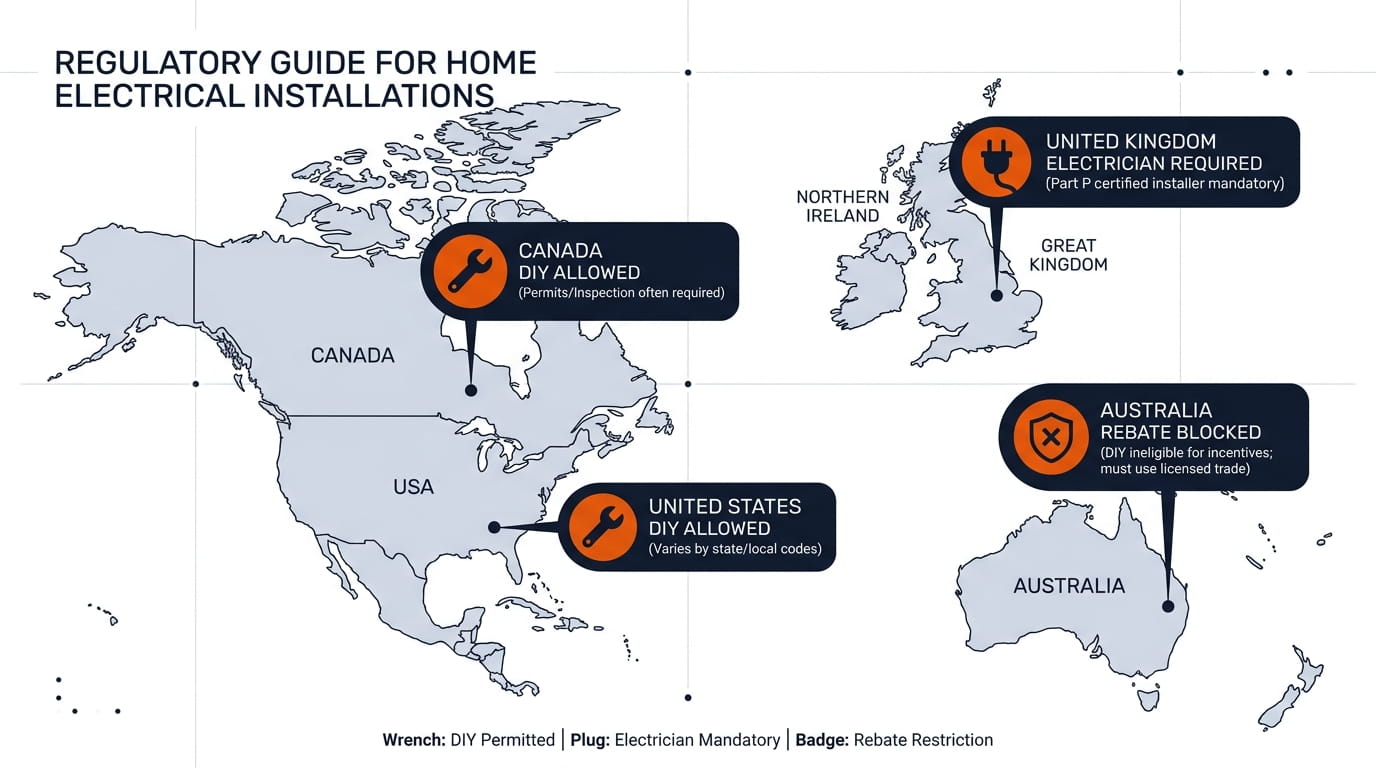
This guide focuses on the United States, Canada, the UK, and Australia. Requirements can change by jurisdiction, so treat the country-level discussion below as a starting point rather than a substitute for your local building department, electrical authority, or utility.
Is It Legal to Install Solar Panels Yourself?
Before buying equipment, ask your local authority which permits are required, whether a homeowner can perform the work, whether an electrical contractor is required, and what inspection process applies. Your utility may have a separate interconnection process for a grid-connected system.
| Region | What to check | Rebate / export consideration |
|---|---|---|
| United States | State and local building/electrical rules, AHJ permits, inspection and utility interconnection requirements. | Incentive eligibility depends on the specific federal, state and local program requirements. |
| Canada | Provincial and municipal electrical rules, permits, inspections and utility requirements. | Eligibility varies by province and program; do not assume a self-installed system qualifies. |
| United Kingdom | Building regulations, electrical requirements, DNO process and certification requirements. | Export-payment eligibility can depend on certification and supplier/scheme requirements. |
| Australia | State/territory electrical licensing rules, local requirements and accredited-installer requirements. | Eligibility for schemes such as STCs depends on the current program rules and installation requirements. |
Can I Install My Own Solar Panels in the US?
In the United States, the answer depends heavily on your state, city or county, authority having jurisdiction, and utility. Some homeowners can perform substantial portions of a solar installation, but permits, electrical requirements, inspections and interconnection rules still apply.
For a grid-tied system, check the local building department and utility before work begins. The National Electrical Code provides the electrical framework, but local authorities determine how it is adopted and enforced. Do not assume that a rule in one state or city applies to another.
If you are planning a homeowner installation, ask four questions: Can I pull the permit myself? Can I perform the mechanical work myself? What electrical work requires a licensed professional? What does the utility require before the system can be energized?
Can I Install My Own Solar Panels in California?
California homeowners should check their local permitting authority and utility rather than relying on a general nationwide DIY rule. Solar projects can involve building, electrical and utility requirements, and the exact process can vary by location and system configuration.
If you are in California, verify the current permit and interconnection requirements with your city or county and utility before purchasing equipment. A self-installation that looks legal mechanically may still require professional electrical work, inspection, or specific utility documentation.
What Parts of a Solar Installation Can You DIY?
Depending on local rules, there are several planning and mechanical tasks a homeowner may be able to handle.
- Site assessment and system sizing. Measure roof area, review shading and estimate energy use. Use a solar sizing calculator before buying equipment.
- Roof layout planning. Work out how many panels fit and where they can be placed with a roof area and layout estimator.
- Panel orientation planning. Estimate tilt and azimuth with a PV tilt and orientation optimizer.
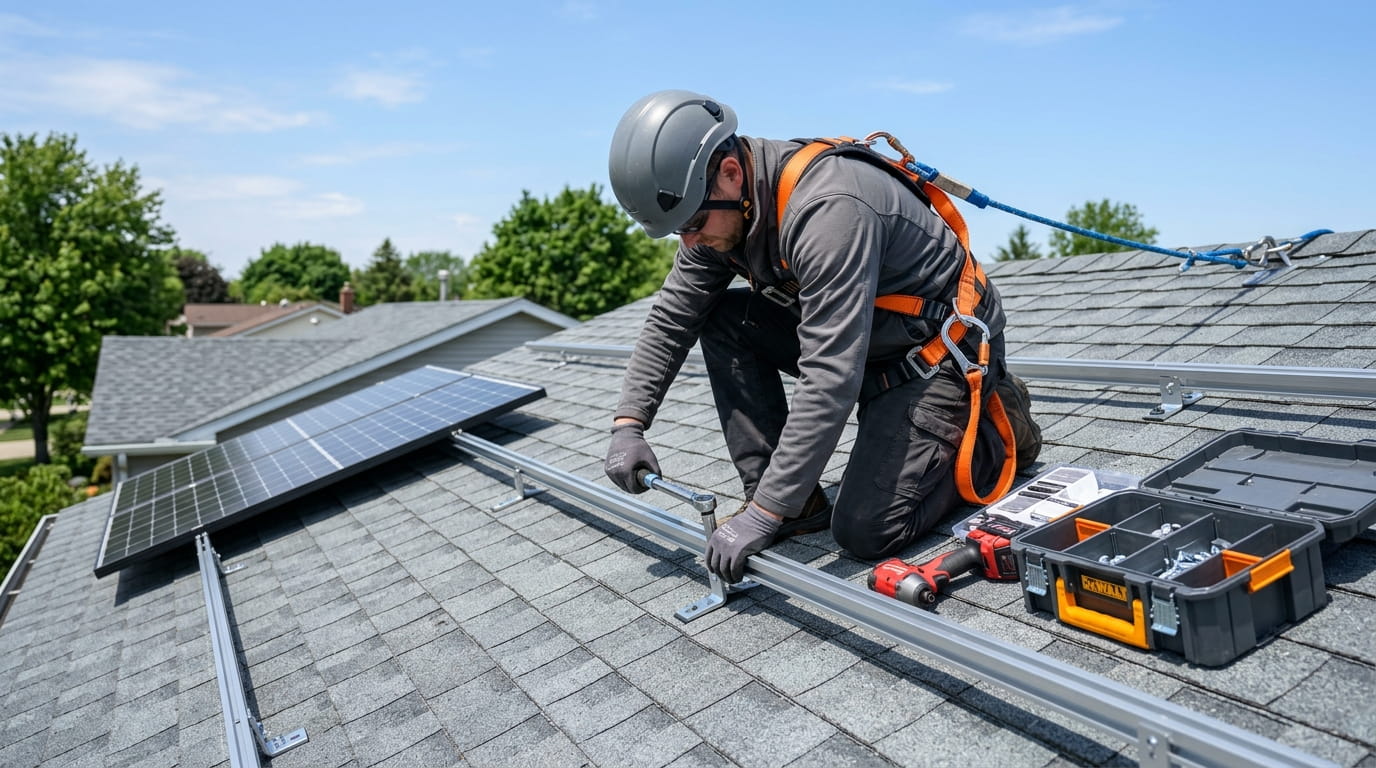
- Mechanical mounting. In jurisdictions that allow it, a homeowner may be able to install racking and panels, subject to roof, structural, fall-protection and manufacturer requirements.
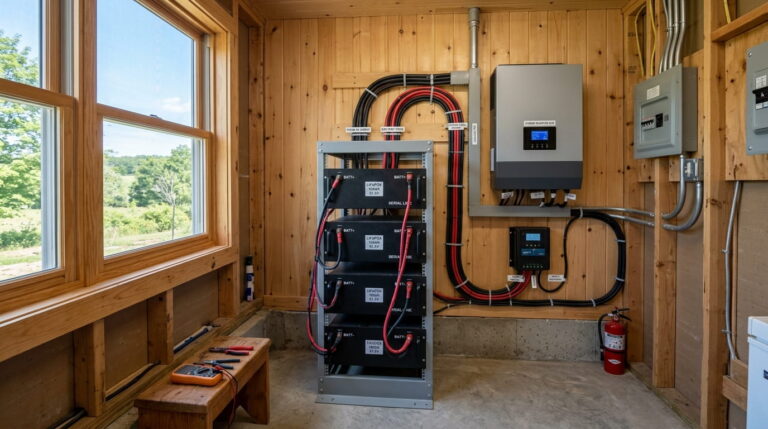
- Some off-grid work. Small, isolated systems can be simpler, but DC voltage, batteries, overcurrent protection and equipment instructions still matter.
| Task | DIY potential | What to verify |
|---|---|---|
| Energy-use calculation | Usually DIY | Use actual bills and realistic loads. |
| Roof layout | Often DIY | Roof condition, setbacks, shading and structural limits. |
| Racking and mounting | May be DIY | Local rules, roof structure, manufacturer instructions and safe roof access. |
| DC electrical work | Jurisdiction dependent | Electrical licensing, code and equipment requirements. |
| Main-panel connection | Usually professional territory | Local electrical rules and inspection requirements. |
| Utility interconnection | Utility dependent | Application, approval, inspection and commissioning requirements. |
How to Install Solar Panels Yourself: Step-by-Step
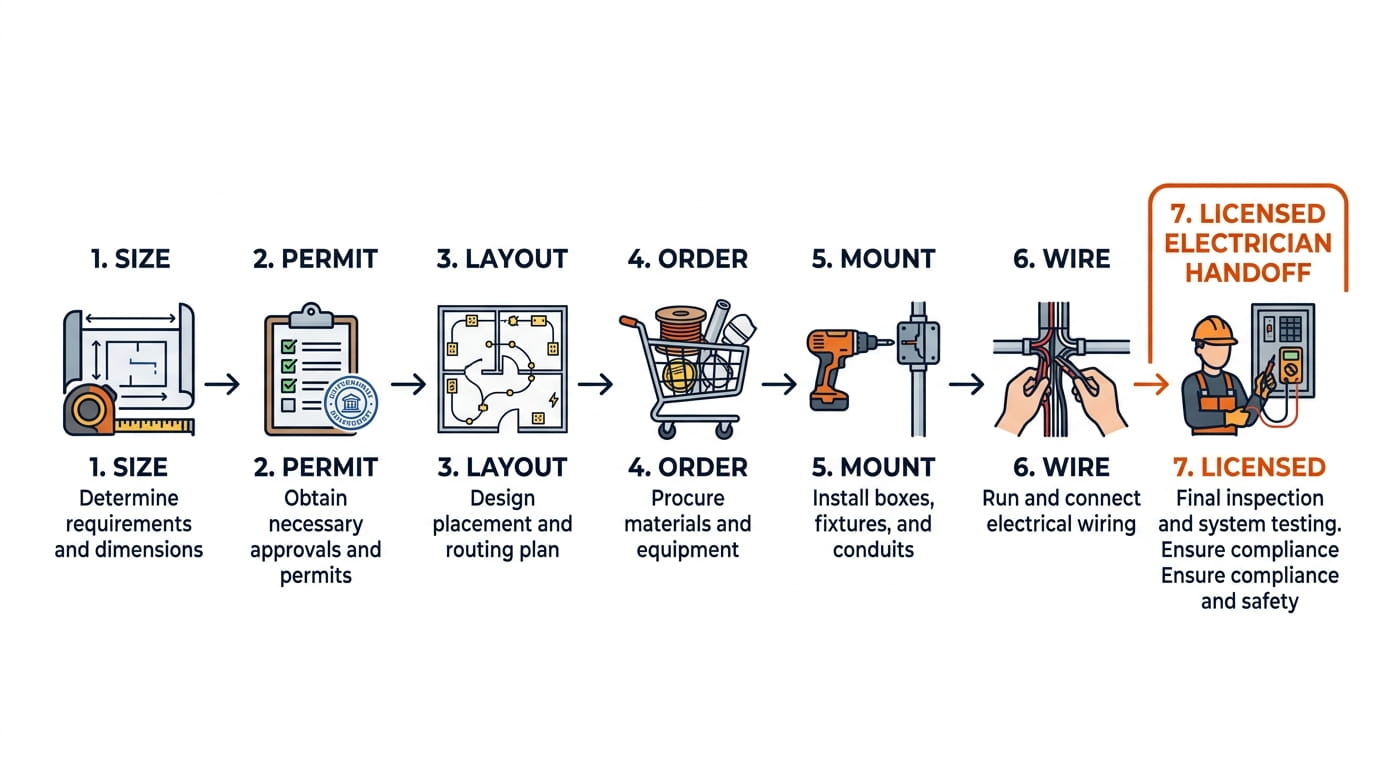
If local rules allow homeowner work, a realistic DIY solar installation usually follows this sequence. The exact order can change when your permitting authority or utility requires approvals before construction.
- Size the system. Use your electricity bills to estimate energy use and determine the approximate panel and battery capacity.
- Check permits and utility rules. Confirm requirements before ordering equipment.
- Inspect the roof and plan the layout. Check roof condition, available area, shading, setbacks and structural considerations.
- Select compatible equipment. Match panels, inverter, racking, protection equipment and batteries where applicable.
- Install the mounting system. Follow the racking manufacturer’s instructions and local structural requirements.
- Mount the panels. Secure modules and use the required attachment hardware and clearances.
- Complete electrical work only if legally permitted and within your competence. Otherwise, hand the electrical portion to the required qualified professional.
- Complete inspection and utility interconnection. Do not energize a grid-connected system until the required approvals and commissioning steps are complete.
How Hard Is It to Install Solar Panels Yourself?
| Part of the project | Typical difficulty | Why |
|---|---|---|
| Energy and system sizing | Moderate | Requires accurate usage and equipment calculations. |
| Roof layout | Moderate | Space, shading, setbacks and roof condition matter. |
| Roof mounting | Moderate to high | Physical work, waterproofing and fall hazards. |
| Electrical work | High | DC/AC hazards and code requirements. |
| Utility interconnection | Moderate to high | Documentation, inspection and utility approval. |
What Should You Never DIY?
Do not treat solar electrical work like ordinary household DIY. PV strings can produce hazardous DC voltage, and batteries can add significant electrical and thermal risk.
- Main electrical-panel connection: use the professional required by your local rules unless you are legally qualified and authorized to perform the work.
- Utility interconnection: do not energize a grid-tied system before required approval and inspection.
- Structural modifications: roof reinforcement should be evaluated by the appropriate qualified professional when required.
- High-voltage or whole-home battery systems: follow local electrical, fire and manufacturer requirements and use qualified installation where required.
Are DIY Solar Panel Kits Worth It?
DIY solar panel kits can simplify equipment selection because panels, racking or other components may be packaged together. They do not automatically make the installation legal, safe or eligible for local incentives.
Before buying a DIY solar panel kit, check whether every component is compatible with your electrical system, whether the equipment is approved for your jurisdiction, what warranty conditions apply to self-installation, and whether a professional is still required for the final connection.
DIY Solar Cost vs Professional Installation
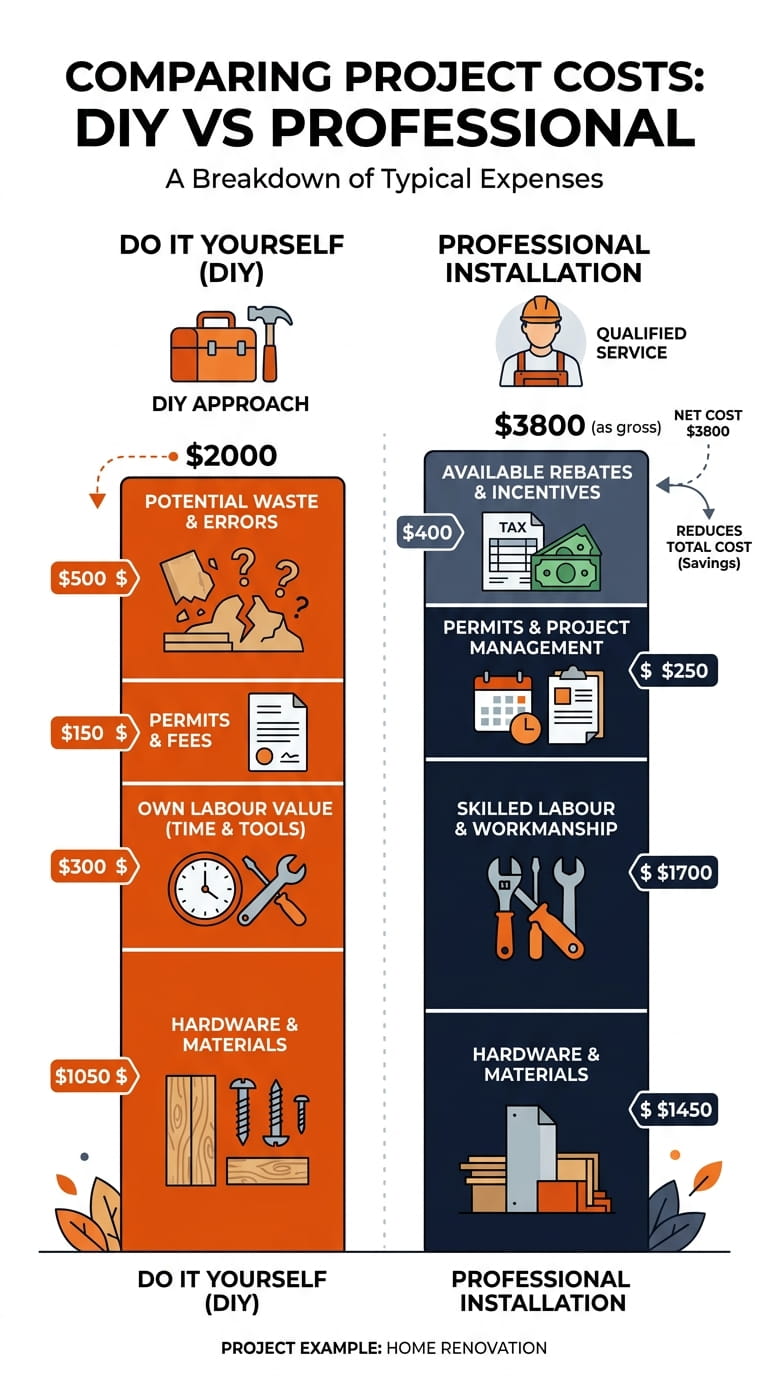
There is no single nationwide DIY solar price. The original planning ranges below are best treated as illustrative rather than a quote, because system size, equipment, location and labor rates vary substantially.
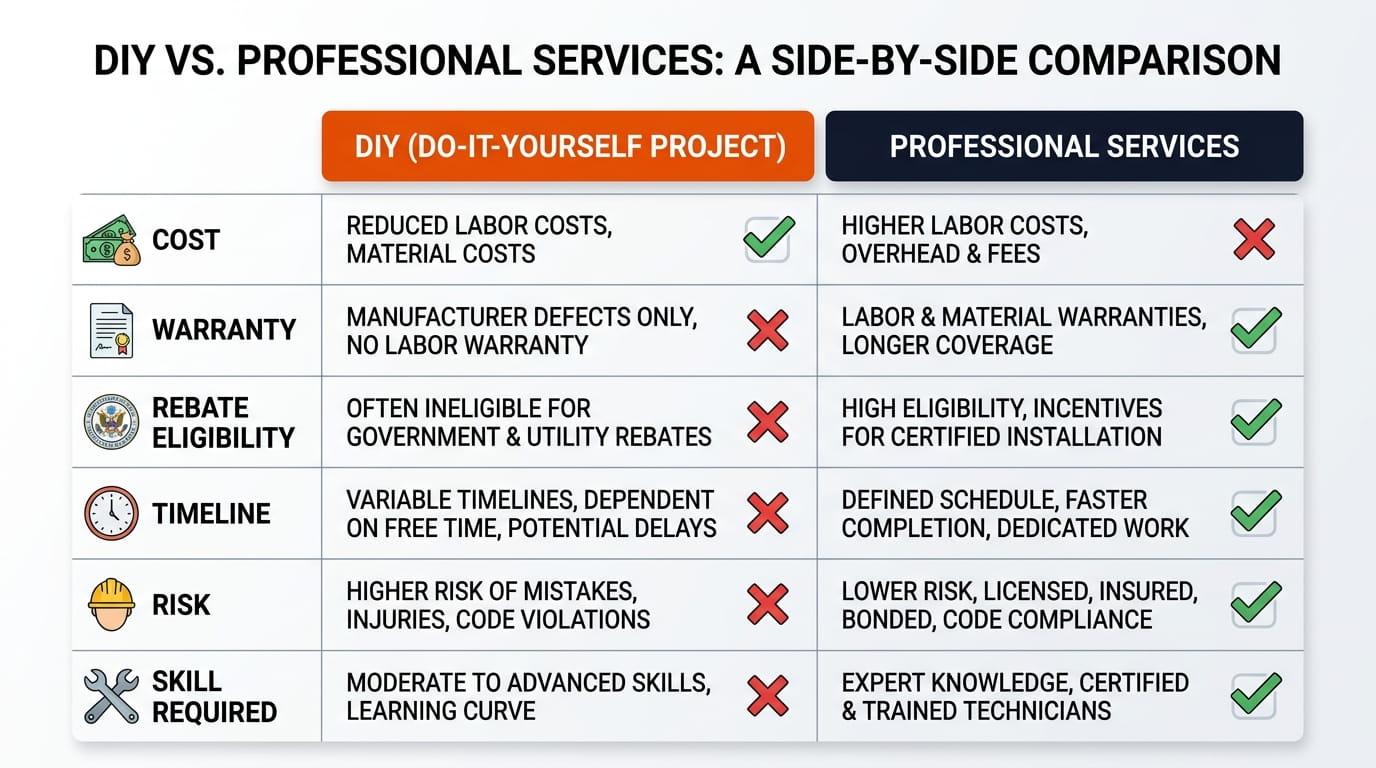
| Cost item | DIY approach | Professional approach |
|---|---|---|
| Hardware | Purchased directly or through a kit | Included in installer proposal |
| Labor | Lower if homeowner performs permitted work | Includes installation labor |
| Electrical work | May still require a qualified electrician | Usually included |
| Permits and inspection | Homeowner may pay/manage them | Often managed by installer |
| Incentives | Depends on program rules | Depends on program rules |
| Warranty | Check self-installation exclusions | Check installer and manufacturer terms |
Use a solar vs grid cost comparison tool to compare your electricity costs and a net metering financial calculator where applicable. The right comparison is your complete project cost after permits, professional work and incentives, not just the price of panels.
Off-Grid vs Grid-Tied Solar: Which Is Easier to DIY?
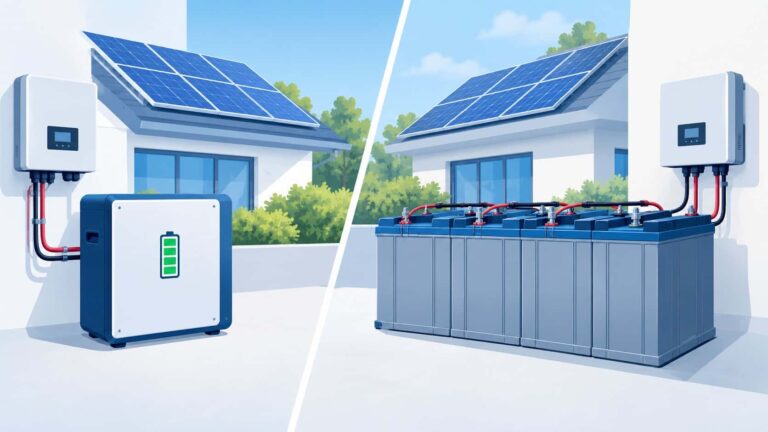
Off-grid systems can be simpler because they do not require utility interconnection. That does not make them risk-free: batteries, DC wiring, overcurrent protection, grounding and equipment compatibility still require care and may be regulated locally.
Grid-tied systems have additional requirements because the inverter must operate safely with the utility grid and the system may export electricity. Interconnection approval and anti-islanding requirements are therefore important parts of the project.
If your goal is backup power rather than utility-bill reduction, compare an off-grid or hybrid design against your essential loads. A hybrid inverter sizing calculator can help with preliminary planning.
5 DIY Solar Installation Mistakes That Cost Homeowners Money
- Skipping permits. A permit problem can create inspection, insurance, resale or utility issues later.
- Undersizing the system. Base panel count on actual electricity use rather than guesswork. Use a solar power per square meter calculator as one planning input.
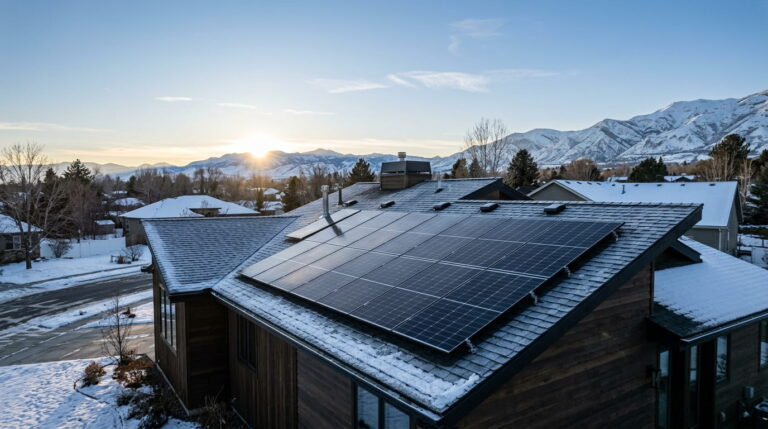
- Ignoring seasonal production. Solar output changes with season, weather, shading and system conditions. See why solar panels underperform in winter.
- Using an incorrect string configuration. Check voltage, current and inverter limits with a PV array string configuration calculator before installation.
- Ignoring roof condition. A solar project can last decades, so evaluate the roof before installing a long-lived system.
Frequently Asked Questions
What is DIY solar panel installation?
DIY solar installation means a homeowner performs some or all permitted parts of a solar project instead of hiring a full-service installer. Depending on local rules, the homeowner may handle planning and mechanical work while a qualified professional handles regulated electrical work.
Can I install my own solar panels?
In many places you can perform at least some parts of the installation, but the exact legal requirements depend on your jurisdiction, system type and utility. Check permits, electrical rules and interconnection requirements before starting.
How do I install solar panels myself?
A typical project involves sizing the system, checking permits, planning the roof layout, selecting compatible equipment, installing the mounting system and panels, completing permitted electrical work, passing inspection and obtaining utility approval where required.
How hard is it to install solar panels yourself?
DIY solar is usually moderate to difficult. Planning is more approachable than roof work and electrical work, while utility interconnection can add another layer of paperwork and inspection.
Can I buy solar panels and install them myself?
You may be able to buy your own equipment, but confirm equipment approval, compatibility, warranty terms, permit requirements and any professional-installation conditions tied to rebates or utility interconnection.
Are DIY solar panel kits worth it?
They can be useful when you want a packaged equipment solution, but a kit does not remove local permitting, electrical, safety or utility requirements. Compare the complete installed cost before buying.
How much does DIY solar installation cost?
The total depends on system size, hardware, permits, electrical work, roof conditions and local labor rates. Compare the complete DIY cost with a professional quote rather than comparing panel prices alone.
Is DIY solar installation worth it?
It can be worthwhile for a homeowner who can legally perform meaningful portions of the work and has a suitable project. For grid-tied systems, professional installation may make more financial sense when it preserves required certification, incentives, warranties or utility approval.
Can I install solar panels myself and still qualify for tax credits or rebates?
It depends on the specific program and jurisdiction. Never assume that a self-installed system qualifies or does not qualify; check the current official program rules before purchasing equipment.
The Bottom Line
You can install some solar equipment yourself, but the answer to can I install solar panels myself depends on your location and the exact work you plan to perform. Planning and some mechanical tasks may be DIY-friendly, while electrical work, inspections, structural issues and utility interconnection can require qualified professionals.
Before ordering panels, verify your local requirements, estimate the complete project cost and check incentive and warranty conditions. Then use the solar sizing calculator and cost comparison tool to test the numbers.
References
- U.S. Department of Energy, Solar Energy Technologies Office: energy.gov
- National Fire Protection Association, National Electrical Code: nfpa.org
- MCS, UK: mcscertified.com
- Clean Energy Regulator, Australian Government: cer.gov.au
- Technical Safety BC: technicalsafetybc.ca

Nouman Ahmed, a Civil Engineer with practical experience in solar energy system design, engineering calculations, electrical systems, and engineering software development. Since 2011, he has been involved in residential and commercial solar energy projects, helping design practical PV solutions and technical calculation tools.
Nouman is the founder of Solvebility, an engineering resource dedicated to publishing accurate, transparent, and easy-to-use online calculators covering renewable energy, electrical engineering, construction, mathematics, finance, health, and other technical disciplines.