
Organic vs Chemical Fertilizer: Cost & Yield Compared
Last Updated: August 15, 2026 | Next Review: February 2027
A ton of urea puts 920 pounds of nitrogen in the ground for less than half what the same amount of nitrogen costs from compost or manure. That’s the number that pulls most growers toward chemical fertilizer every spring.
But price per pound isn’t the whole story. Fertilizer already eats 33 to 44 percent of corn operating costs and a similar share of wheat costs, and growers who lean on synthetic nitrogen year after year often watch that number creep up as soil fertility declines and they need more of it to get the same yield.
This guide breaks down what organic and chemical fertilizer actually cost per acre, what each one does to your yield in year one versus year five, and how to decide which fits your operation, whether that’s a row-crop field or a backyard vegetable bed. It’s based on USDA cost data, peer-reviewed yield studies, and extension research from Nebraska and Oregon State. For more growing guides like this one, check the Solvebility blog, and for the full set of nutrient and irrigation tools mentioned throughout, see the fertilizer and farming calculators hub.
What’s the Real Difference Between Organic and Chemical Fertilizer?
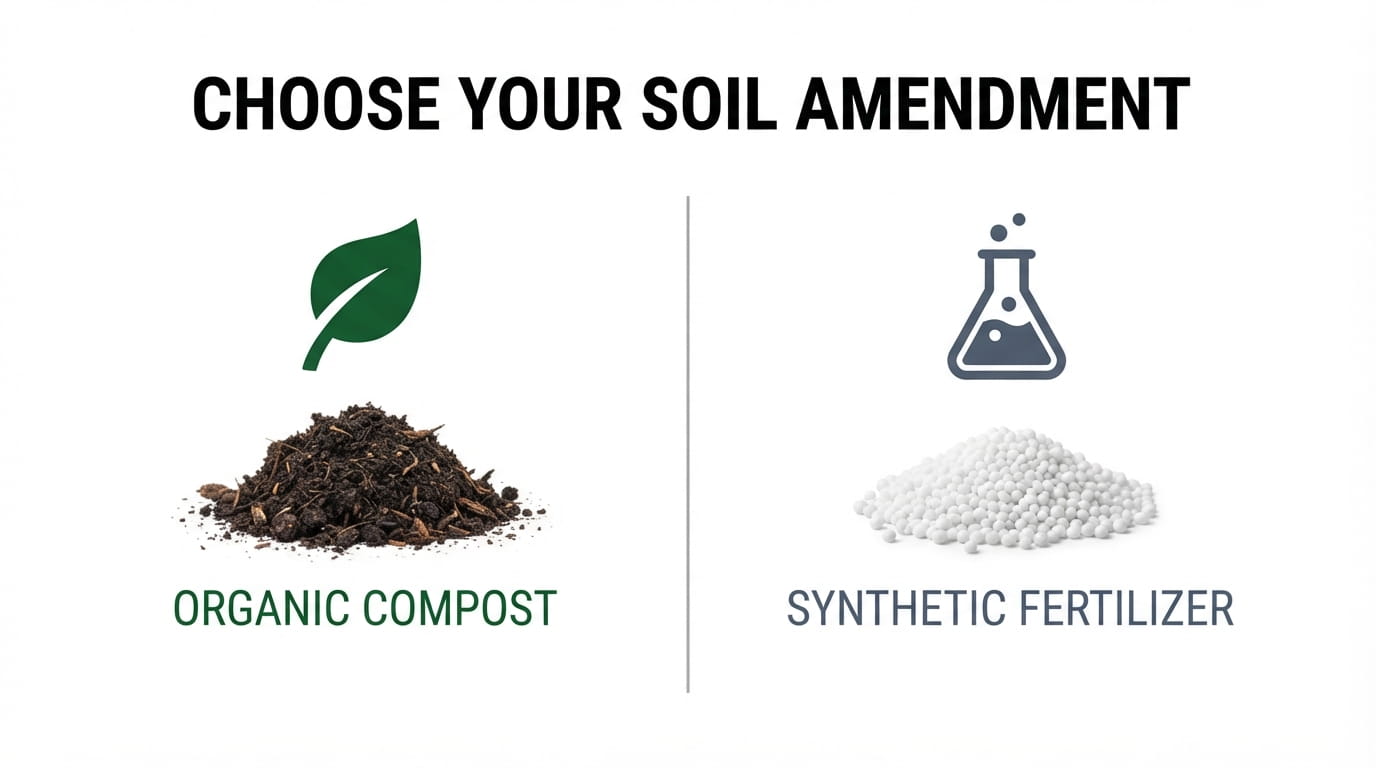
Chemical fertilizer (also called synthetic or inorganic fertilizer) is manufactured, usually from natural gas for nitrogen or mined minerals for phosphorus and potassium. Urea, ammonium nitrate, and DAP are the common ones. The nutrient content is exact and printed right on the bag: 46-0-0, 10-10-10, whatever it is.
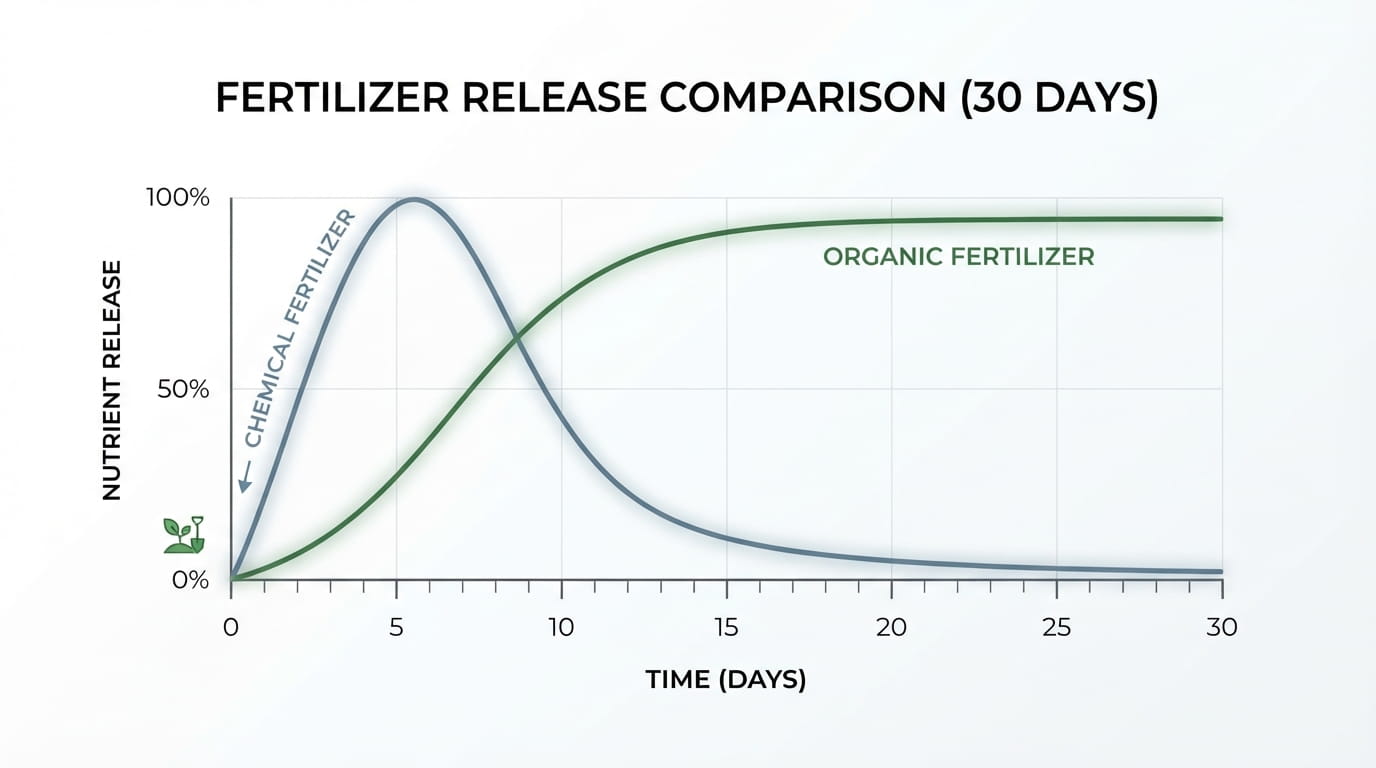
Organic fertilizer comes from manure, compost, bone meal, fish emulsion, or plant residue. Nebraska Extension notes that organic products are typically slow-release. Soil microbes have to digest the material before your plants can use it, which can take days to weeks depending on temperature and soil biology.
You’ve probably heard both sides overstate their case. Organic isn’t automatically safer, and chemical isn’t automatically harmful. They’re just two different delivery systems for the same handful of nutrients.
Nutrient Release Speed
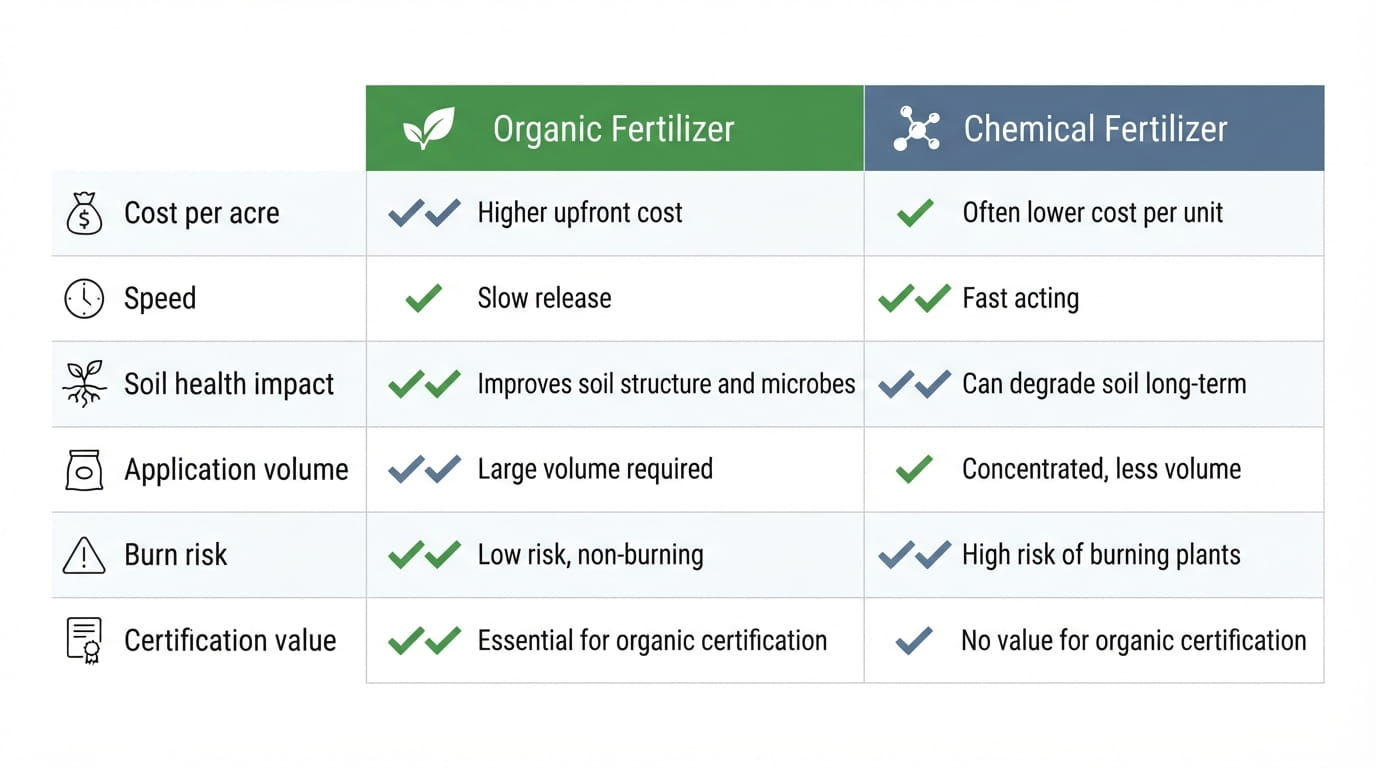
| Factor | Chemical Fertilizer | Organic Fertilizer |
|---|---|---|
| Nutrient release | Fast, 1-7 days | Slow, 2-8 weeks |
| Nutrient concentration | High, precise (e.g. 46% N in urea) | Low, variable (typically 1-6% N) |
| Application volume needed | Low (lbs per acre) | High (tons per acre) |
| Risk of burn/leaching | Higher if over-applied | Lower, but runoff risk with raw manure |
| Soil biology impact | Neutral to negative long-term | Positive, builds organic matter |
| Application labor | Low | Higher (bulk handling, spreading) |
Get your baseline right before you compare costs. Run your field’s actual nutrient needs through a crop nutrients requirement calculator first. The gap between what your crop needs and what you’re applying is where most of the wasted money hides.
How Much Does Organic Fertilizer Cost vs Chemical Fertilizer?
Here’s the math nobody puts on the bag. A ton of urea (46% nitrogen) delivers about 920 pounds of actual nitrogen. Compost typically runs 1 to 3 percent nitrogen by weight, so you’d need 15 to 45 tons of compost to match that same 920 pounds. That volume difference drives everything: hauling, spreading, storage, and labor.
USDA’s Economic Research Service put average corn fertilizer costs at around $125 per acre from 2006 to 2021, spiking to $225.78 in 2022 during the price shock, then settling near $186.73 in 2023. That’s mostly synthetic nitrogen pricing, since it dominates row-crop fertility programs.
Organic-only programs on the same acreage typically run higher on a straight cost-per-acre basis, largely because of the bulk material and application labor. Smaller-scale numbers back this up too: residential lawn treatment data from Angi shows organic fertilizer application running $50 to $95 for an 8,000-square-foot lot, against $25 to $80 for synthetic on the same area.
Cost Per Acre: Organic vs Chemical (Row Crops)
| Crop | Chemical Fertilizer (per acre) | Organic-Only Program (per acre) | Combined/Blended Approach (per acre) |
|---|---|---|---|
| Corn | $150 – $225 | $220 – $340 | $170 – $250 |
| Wheat | $65 – $110 | $100 – $170 | $75 – $125 |
| Vegetable crops (intensive) | $300 – $500 | $450 – $700 | $350 – $550 |
| Orchard/perennial | $180 – $280 | $250 – $400 (year 1), lower after year 3 | $200 – $320 |
These are planning ranges, not quotes. Regional pricing, whether you’re buying or generating your own compost, and current nitrogen prices all move the number. Run your own crop and acreage through a fertilizer dose calculator to get a figure specific to your field.
One thing that shifts this comparison: organic certification. Operations pursuing USDA Organic status can charge 20 to 100 percent price premiums on certain crops, which can flip the ROI even if the input cost stays higher. If you’re not certified and not planning to be, that premium doesn’t apply, and the chemical route usually wins on pure input cost.
Which One Actually Produces a Bigger Yield?
Sara runs eight acres of mixed vegetables outside Lahore. Her first two years on straight synthetic nitrogen gave her strong, predictable yields. By year three, she was applying more urea to hit the same numbers, and her soil test showed organic matter had dropped. That’s a pattern researchers see often: synthetic-only systems can drift toward diminishing returns as biological fertility declines.
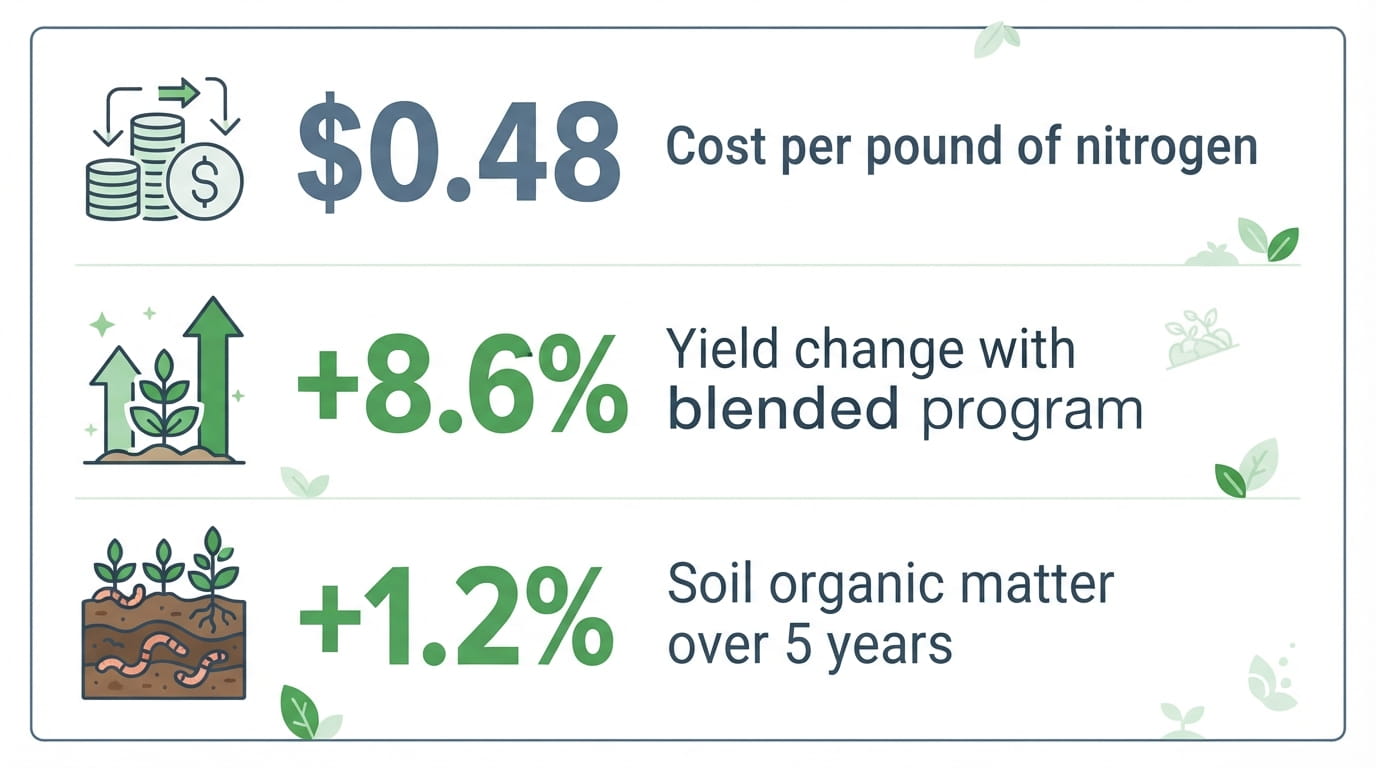
A 2021 meta-analysis of vegetable systems found that combining organic and synthetic nitrogen, with synthetic making up 70 percent or less of the total, increased vegetable yields by 5.5 to 5.6 percent compared to synthetic alone, and cut nitrogen leaching by 41 to 48 percent. Push organic substitution past 70 percent of total nitrogen, though, and yield dropped by 13.6 percent. There’s a sweet spot, not an all-or-nothing choice.
Field-crop research points the same direction. A wheat-maize rotation study found that partial organic substitution boosted soil organic carbon and nitrogen while matching or beating synthetic-only yields, especially by the second year of the program.
Why Chemical Fertilizer Wins Short-Term
Nutrients are available almost immediately. If you’ve got a nitrogen deficiency showing up mid-season, synthetic correction fixes it in days. Organic amendments can’t respond that fast because microbes need time to break the material down.
Why Organic Fertilizer Wins Long-Term
Organic matter improves water retention, feeds soil microbes, and builds a nutrient reserve that keeps releasing nutrients over multiple seasons. Fields with a consistent organic input tend to hold up better under drought stress and compact less under equipment.
What Happens to Your Soil After 5 or 10 Years?
Soil pH drift is the quiet cost of synthetic-only programs. Nitrogen fertilizers, urea and ammonium sources especially, acidify soil over years of repeated use. That’s not a reason to avoid them, but it is a reason to test your soil regularly and budget for lime if you’re running a synthetic-heavy program long-term.
Organic inputs tend to counteract that acidification and add carbon the soil food web can use. The catch: nutrient concentration is lower and less predictable, batch to batch, than a bag of synthetic fertilizer with a guaranteed analysis printed on it.

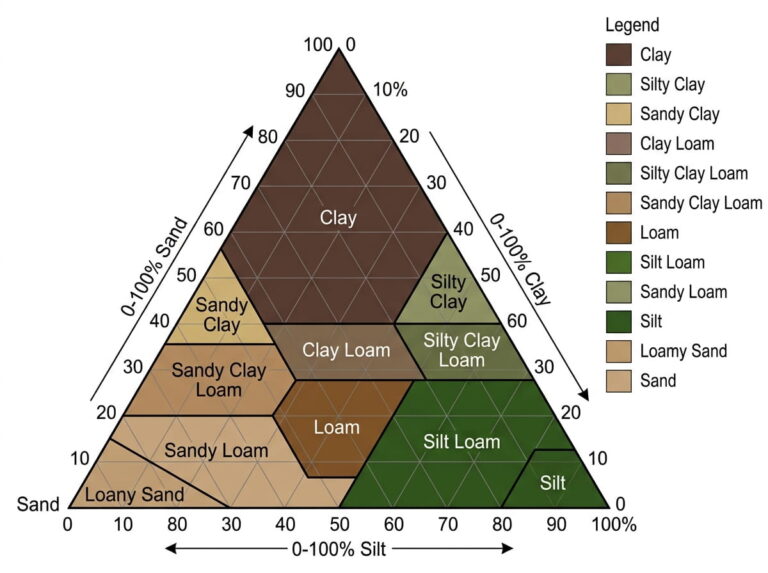
Before you commit either direction, check your starting point. A soil texture classifier and a soil amendment calculator will tell you what you’re actually working with, since sandy soil and clay soil respond very differently to both fertilizer types.
Organic vs Chemical Fertilizer: Which Should You Use?
The choice usually isn’t organic or chemical. It’s how much of each, and when.
- Annual row crops on a budget: Lean synthetic for the base nutrition, add organic matter between seasons when you can.
- Perennials, orchards, vineyards: Organic pays off over the decades these crops are in the ground. The soil-building math works in your favor.
- Certified organic operations: The premium on the product usually more than covers the higher input cost.
- Mid-season deficiency: Synthetic, every time. Organic can’t respond fast enough.
- Building a new or depleted field: Start with organic matter to rebuild biology, then layer in synthetic for precision once the base is solid.
Home Garden and Lawn: Does the Same Math Apply?
Elena keeps four raised beds in her backyard outside Austin, mostly tomatoes, peppers, and herbs. She switched from a synthetic all-purpose feed to compost and worm castings two seasons ago, expecting a yield hit. It didn’t come. Her plot is small enough that the cost gap barely registers, a few dollars a season, and the beds hold moisture noticeably better through July now.
That’s the pattern on small plots generally. The volume problem that makes organic fertilizer expensive on a 40-acre field mostly disappears at garden scale, since you’re moving a few bags of compost, not tons of it. The lawn-care cost data bears this out too: for something the size of an average yard, the price gap between organic and synthetic fertilizer is often just a few dollars per application, not the wide spread you see across full acreage.
If you’re gardening rather than farming, run your bed or lawn size through the same fertilizer dose calculator used above. It scales down to backyard numbers just as easily as it scales up to a field.
Whatever mix you land on, don’t guess at rates. Run the numbers through a fertilizer dose calculator before you buy, and if you’re irrigating, check your irrigation water requirement alongside it since fertigation timing changes how much nitrogen actually reaches the root zone. Running drip lines through the same field? The drip irrigation design calculator helps you size the system so fertigation and irrigation are planned together, not as two separate guesses.
Plan your exact fertilizer rate before you spend a dollar on inputs.
Try the Free Fertilizer Dose Calculator →Frequently Asked Questions
What is chemical fertilizer?
Chemical fertilizer is a manufactured product, typically urea, ammonium nitrate, or DAP, that delivers a precise, concentrated dose of nitrogen, phosphorus, or potassium. It’s water-soluble and available to plants within days.
How does organic fertilizer actually work in the soil?
Organic fertilizer feeds soil microbes, which break down the material and release nutrients gradually. It takes longer to act than chemical fertilizer, but it also builds organic matter and microbial activity that keeps working long after the application.
Why should farmers consider organic fertilizer if it costs more?
Organic fertilizer builds soil structure, water retention, and long-term fertility that synthetic-only programs slowly erode. For perennial crops or organic-certified markets, that soil investment and the price premium usually outweigh the higher upfront cost.
When is chemical fertilizer the right choice?
Chemical fertilizer is the right call when you need a fast, measurable correction, mid-season deficiencies, tight planting windows, or annual crops where you don’t have years to build soil biology.
How much does organic vs chemical fertilizer cost per acre?
Chemical fertilizer for corn runs roughly $150 to $225 per acre. An organic-only program on the same acreage typically runs $220 to $340 per acre because of the volume of material needed. A blended program usually lands closer to $170 to $250.
Organic vs chemical fertilizer: which gives a better yield?
Chemical fertilizer gives faster, more predictable yield in year one. Research on combined programs shows organic-synthetic blends, with synthetic at 70 percent or less of total nitrogen, can outyield synthetic alone by around 5 to 6 percent while cutting nitrogen leaching sharply.
Is organic fertilizer worth it for a home garden?
For a home garden, yes, usually. The cost difference on a small plot is a few dollars, and the soil-building benefit compounds year over year in a space you’re not rotating out of.
Can you mix organic and chemical fertilizer in the same program?
Yes, and most working farms do exactly this. A common approach is organic matter for baseline soil fertility between seasons, with targeted synthetic applications for precise, fast correction during active growth.
Key Takeaways
Chemical fertilizer wins on cost per pound of nutrient and speed. Organic fertilizer wins on soil health and long-term fertility, and it can close the yield gap once biology builds up. The data keeps pointing the same direction: a blended program, not an all-or-nothing choice, gets you the best cost-to-yield outcome on most farms and gardens.
Start by running your actual field numbers, not a generic rule of thumb, through a crop nutrients calculator and a fertilizer dose calculator. From there you’ll know exactly how much of each type you need, and what it’ll cost you this season.
References
- USDA Economic Research Service, “Fertilizer prices stable at onset of 2025 planting season” (2025). ers.usda.gov
- USDA Economic Research Service, “Fertilizer share of expected corn production expenses” (2024). ers.usda.gov
- Nebraska Extension, Lancaster County, “Natural vs. Synthetic Fertilizers.” lancaster.unl.edu
- Combined organic and synthetic nitrogen fertilizer meta-analysis, vegetable systems (2021). pubmed.ncbi.nlm.nih.gov
- Partial organic substitution study, wheat-maize rotation system, ScienceDirect. sciencedirect.com
- Angi, “Differences Between Synthetic vs Organic Fertilizers.” angi.com
This article was researched using USDA cost data, peer-reviewed agricultural studies, and university extension guidance, current as of August 2026.

Nouman Ahmed, a Civil Engineer with practical experience in solar energy system design, engineering calculations, electrical systems, and engineering software development. Since 2011, he has been involved in residential and commercial solar energy projects, helping design practical PV solutions and technical calculation tools.
Nouman is the founder of Solvebility, an engineering resource dedicated to publishing accurate, transparent, and easy-to-use online calculators covering renewable energy, electrical engineering, construction, mathematics, finance, health, and other technical disciplines.